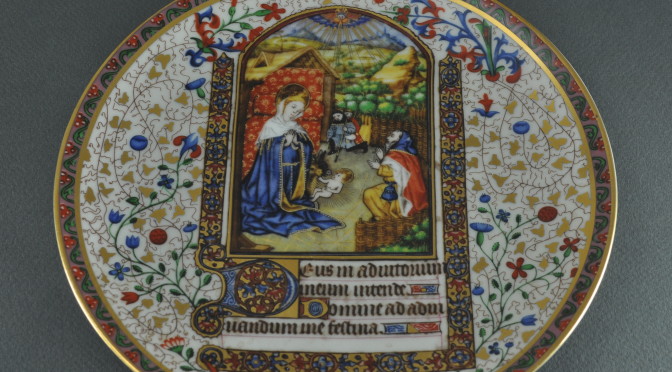
This porcelain plate depicts a 15th C. Illumination of Flemish origin. The manuscript, a Book of Hours is currently preserved in the Vatican Library. The almost full-page illumination for the Liturgy of the Hours on Christmas Day depicts a lovely Nativity scene which is greatly inspired by the visions of St. Bridget of Sweden (1303-73).
Category Archives: Europe
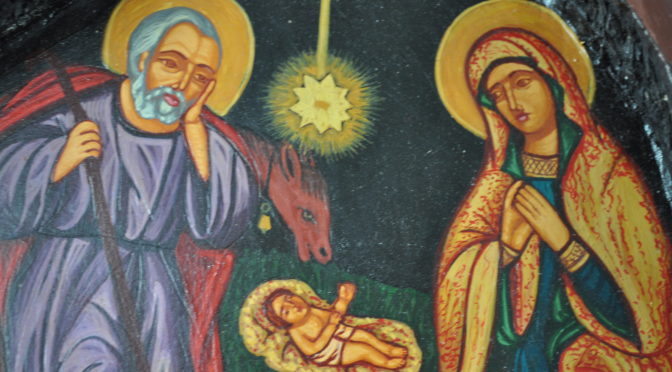
Bulgarian Nativity Icon
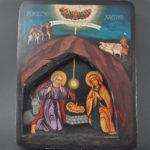
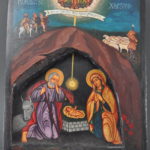
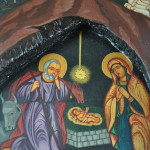
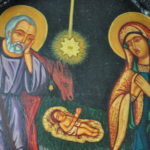
This three-dimensional icon creates the impression of a cave in which the Holy Family is huddled together. In the center the baby Jesus is lying on some straw. The star of Bethlehem shines brightly above Jesus. Mary kneels down in adoration. Joseph holds his left hand to his head in seeming disbelief. The traditional ox and donkey are present.
Beyond the cave a shepherd who is tending his sheep gazes in amazement at the singing choir of angels. The three magi arrive in the distance.
Two inscriptions illuminate the visual message. The scroll above the cave of the Nativity right beneath the singing angels reads as follows though with some difficulty: Δόξα εν υψίστοις Θεω και επί γης ειρήνη which is Greek for “Glory to God in the highest and on earth peace.” The two words on either side of the singing angels seem to be Bulgarian: рождество and христово meaning the Nativity of Christ. Though the и in христово is replaced with a Greek ι as in хрιстово.
Nadia Keildinova owns a gallery in a small tourist town called Nesebar in Bulgaria. She has been painting icons for over 30 years. About her work she says: “I’m very proud of the fact, that you can find an Icon painted by me in almost every country in the World. In the summer of 2018 I became the artistic ambassador for my country in the “European Art Museum” located in Denmark. My Icons are made with the techniques created by the Masters of Old.”
Alessi Presepe
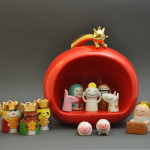
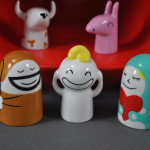
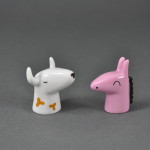
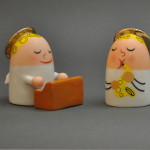
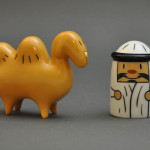
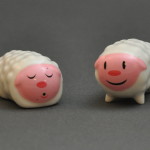
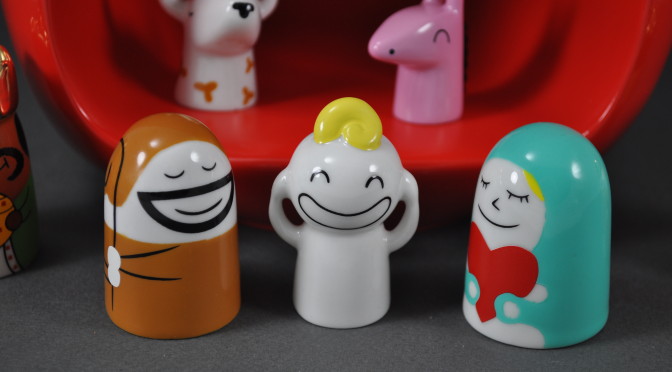
This colorful and playful nativity was designed by Massimo Giacon for Alessi, an Italian Design Company started by the Alessi family in 1921.
Born in Padua, Italy, in 1961, Massimo Giacon is a comic-strip artist and illustrator, a leading light in the renewal of Italian comic, he divides his time as a graphic artist, designer, musician and artist.
This nativity was made in Italian porcelain and hand painted.
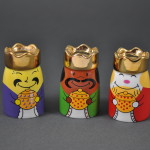
Of great interest is the depiction of the magi. They playfully illustrate the belief promoted by the Venerable Bede (d. 735) that the Magi or wise men represented the three parts of the world known to him: Asia, Africa, and Europe.