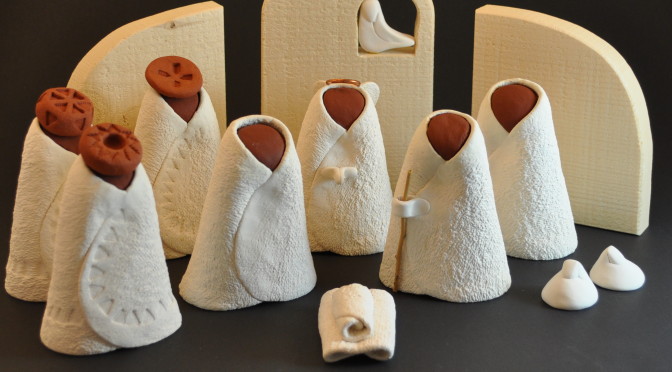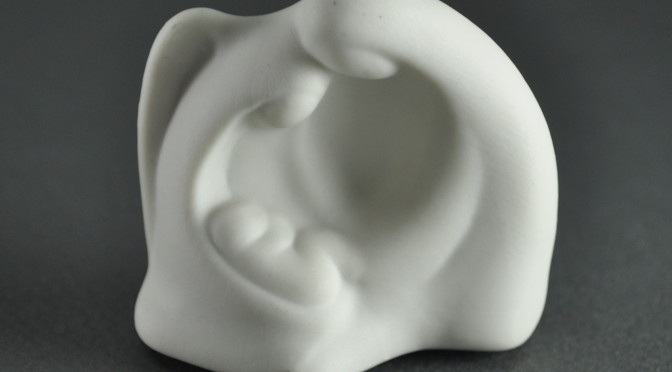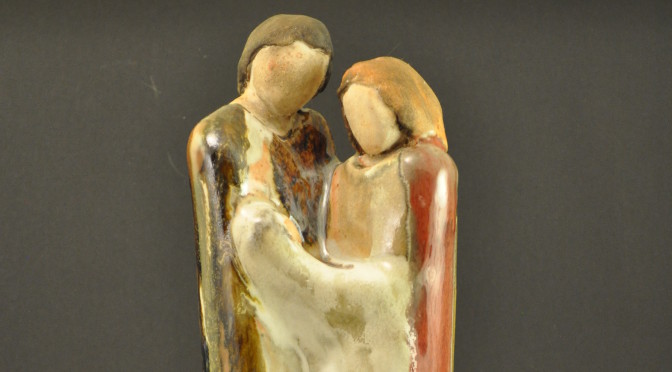
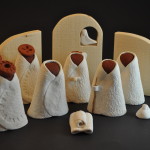
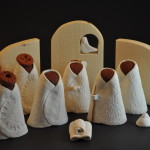
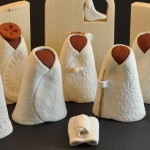
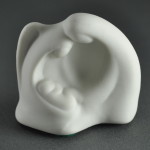
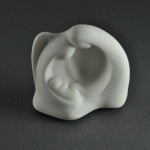
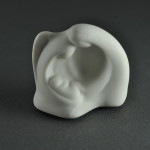
This ceramic Holy Family was created by Elena Madureri of Cerámica Latina. Though abstract the piece is able to convey the intimacy and tenderness that exists between Mary, Joseph and Jesus.
This ceramic Holy Family was created by Elena Madureri of Cerámica Latina. Though abstract the piece is able to convey the intimacy and tenderness that exists between Mary, Joseph and Jesus.
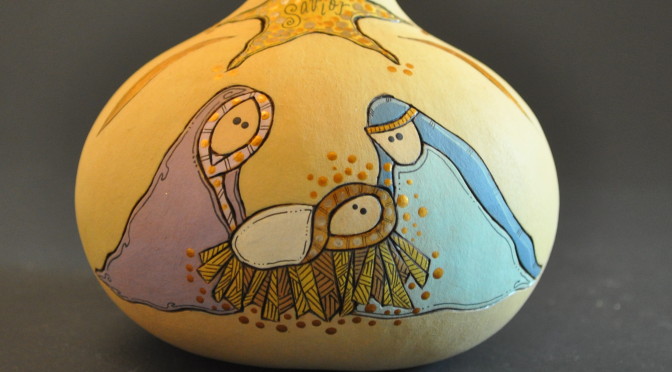
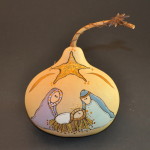
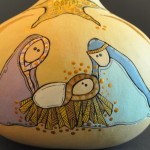
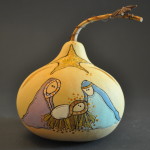
This whimsical nativity was painted on a gourd by Julie Bolanz. Julie is an artist who primarily works with gourds. In her own words: “I have been working primarily with gourds for the last 25 years and never remember a day that I wasn’t dreaming of creating something or sketching.” Her favorite topic is Christmas.
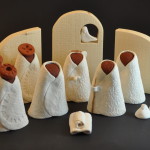
This nativity is a perfect blend between traditional Southwest and contemporary styles. It was created by Tohono Trail pottery artist Peggy Klapheke in 2011.
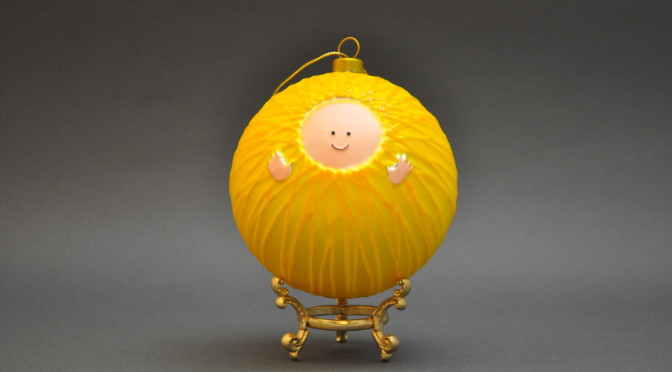
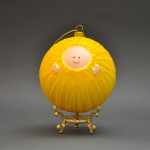
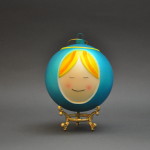
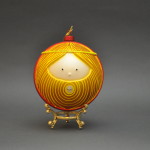
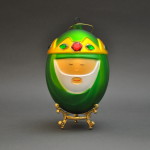
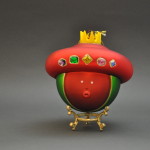
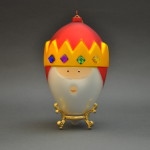
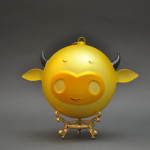
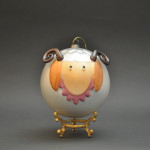
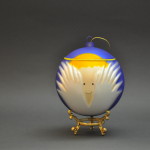
These Christmas Baubles were designed by Marcello Jori for Alessi, and Italian Design Company founded by the Alessi family in 1921. He combines two great traditions, the nativity scene and the decoration of the Christmas tree.
These Baubles are hand painted on an internally mirrored glass base to give the decoration an effect of luminosity and depth.


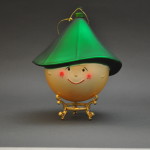
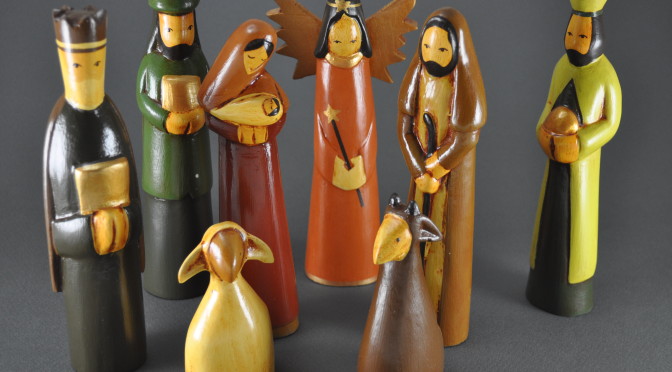
This nativity was carved from Alstonia also known as Devil Tree, a tropical tree native to Indonesia, among other countries. The eight figures have a contemporary appearance with simple ornamentation in muted tones.
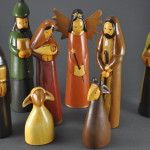
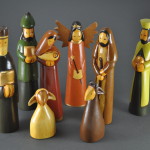
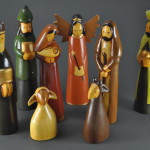
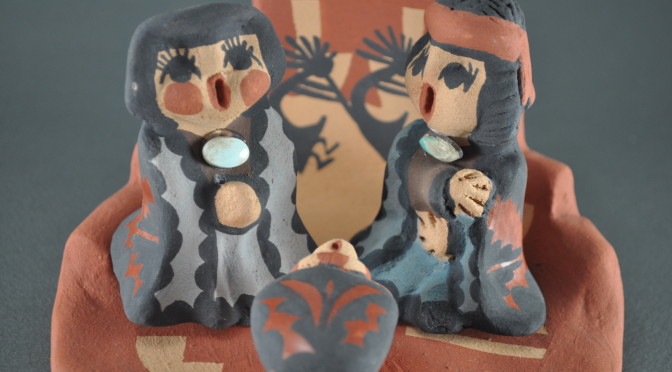
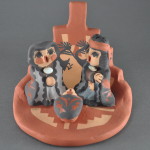
Cindy Fragua is a pottery maker from Jemez Pueblo. She learned to make pottery from her older sisters who in turn were taught by their mother Grace Loretto Fragua and grandmother Emilia Loretto.
Jemez pottery tradition experienced a great revival in the 20th century after a decline following the 1680 Pueblo Revolt. Today’s Jemez pottery blends ancient techniques with contemporary innovation. Potters use locally gathered red clay and natural dyes to create their signature earth tones.
A typical Jemez geometric symbol is the Kiva steps which takes the form of stairs and symbolizes life’s journey from birth to afterlife. Typical figures are the storytellers with their heads slightly tilted up and open mouths. During the winter months, story telling was a daily occurrence when at night the elders told ancient tribal stories.
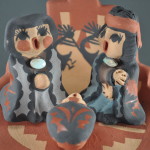
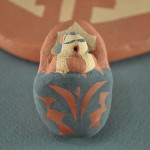
This holy family is modeled after story tellers with Mary and Joseph looking up and Jesus, Mary and Joseph having their mouth open. They are depicted as telling the story of the great mystery of salvation.
Their dwelling is decorated with Kiva steps both in the design of the stepped back of the building and the painted decorations on the floor of the structure.
The angels who are often present in depictions of the nativity were replaced by Ms. Fragua with typical Puebloan Kokopelli. These humpbacked, flute-playing figures with antenna-like protrusions on their head are associated with music, joy, the miracle of birth and the celebration of life.
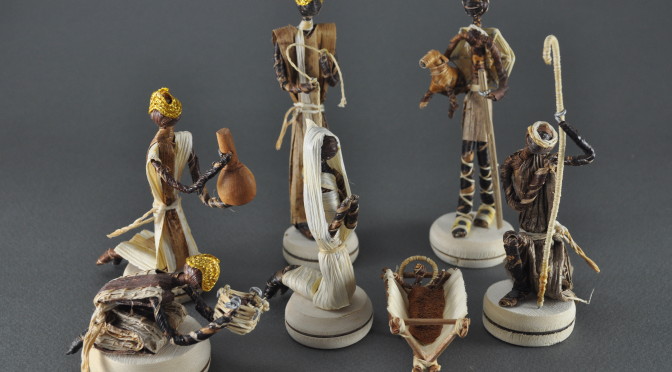
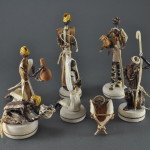
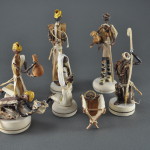
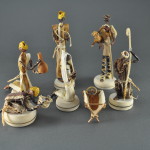
This handmade nativity set is handcrafted out of banana fiber by artisans in Kenya. The banana fiber is first dried, then a light varnish applied. Then the dried and varnishes fibers are cut into thin strips which are used to create the figures.
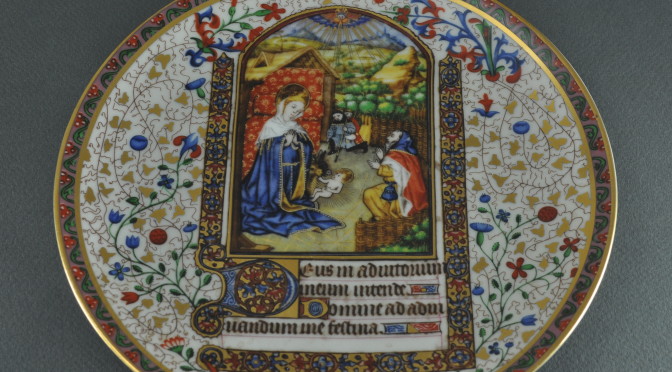
This porcelain plate depicts a 15th C. Illumination of Flemish origin. The manuscript, a Book of Hours is currently preserved in the Vatican Library. The almost full-page illumination for the Liturgy of the Hours on Christmas Day depicts a lovely Nativity scene which is greatly inspired by the visions of St. Bridget of Sweden (1303-73).
This sweet semi-abstract miniature holy family is carved out of stone.
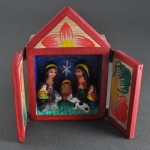
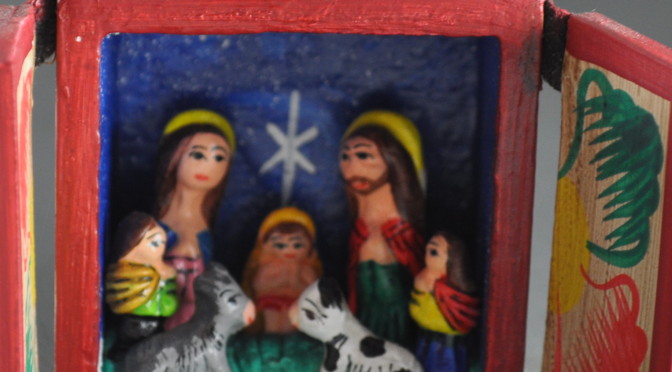
This Peruvian Retablo exemplifies the merger of Spanish Catholicism and Indigenous customs. After converting to Christianity Peruvians embraced the Spanish custom of creating portable shrines or retablos which were used for domestic devotions. These retablos were dedicated to saints or they depicted moments in the life of Jesus. The representation is often rendered in indeginous artistic idioms.