Category Archives: New Mexico

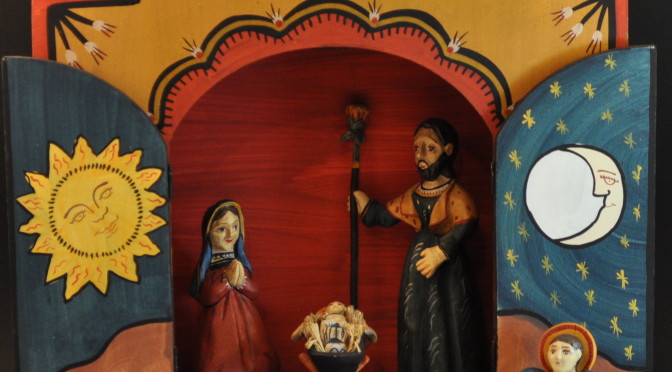
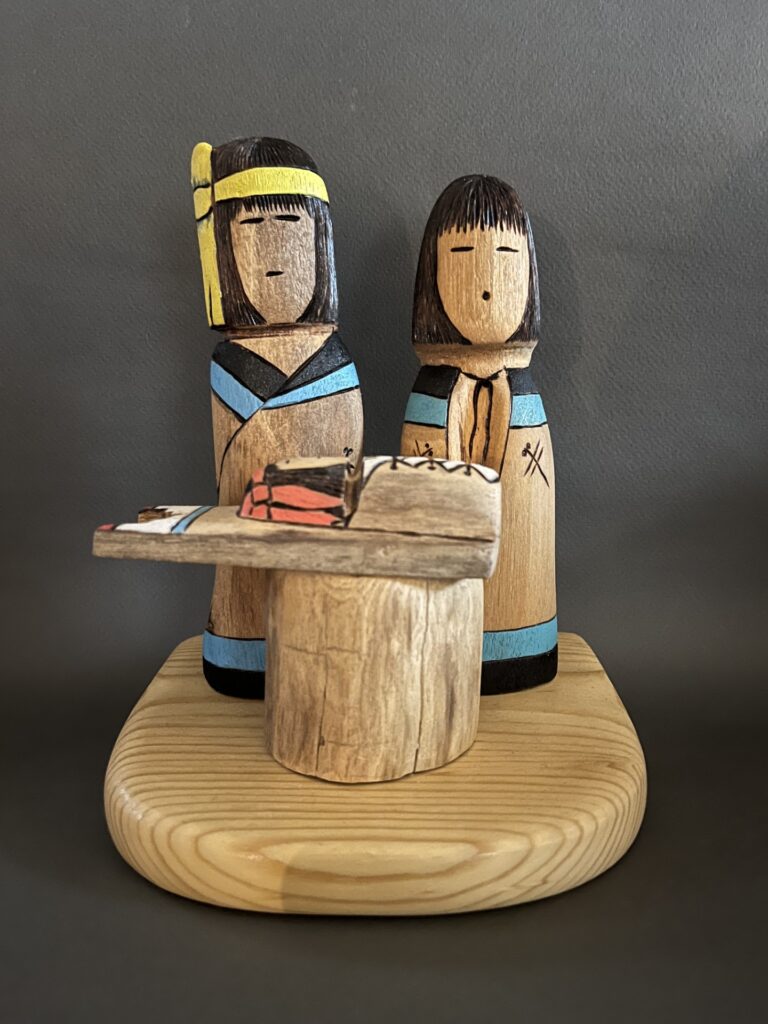
Zuni Holy Family

The Zuni are indigenous Pueblo peoples native to the Zuni River valley in the southwest of the United States. They have lived in this area for between 3000 and 4000 years. Today, most Zuni live in the Zuni Pueblo located on the Zuni river in western New Mexico. While traditionally they were farmers many Zuni today rely on the sale of traditional arts and crafts.

Zuni have a longstanding tradition of creating wooden dolls or Katsina/Katchina dolls that represent spirit messengers and are used for religious education especially of children. They are also displayed in homes as reminders of the spiritual beings that guide their community and bring blessings. The carving is relatively simple compared to that of other tribes like the Hopi but Zuni Katchinas are often decorated with feathers and clothing.

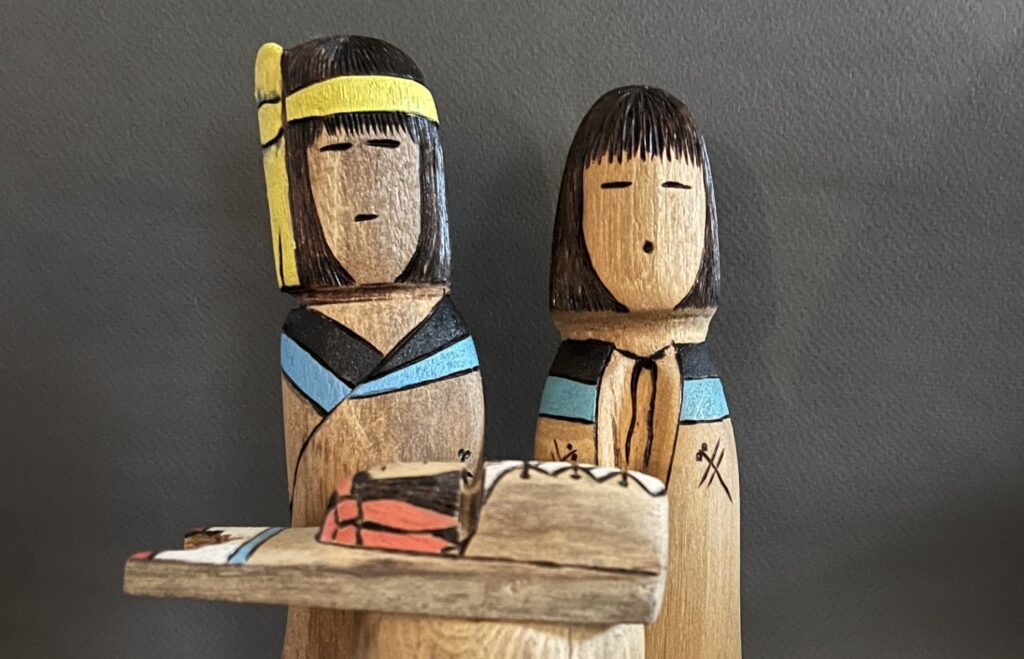
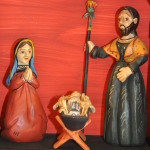
This nativity was created by Alan Lynn Lewis who is best known for his graceful cottonwood carvings. After years of working in construction Alan taught himself to carve around 1990. He grew up surrounded by art and artists. His mother was well known for her beaded dolls. His brother, Robert, specialized in carving realistic people out of cottonwood. Alan signs his art with A.L.

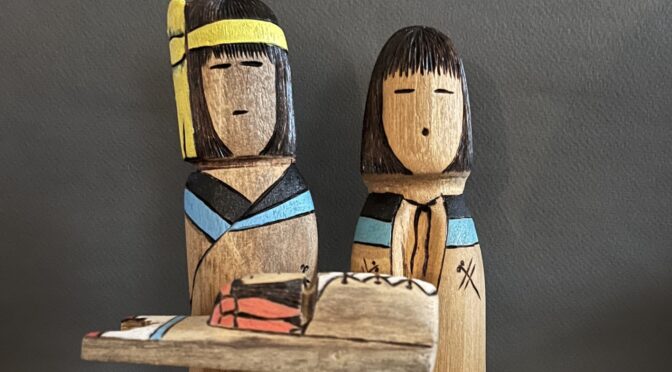
This Holy Family is clearly inspired by the traditional Zuni woodcarving in its minimalist simplicity.  The Holy Family is Zuni. The baby Jesus lies on a typical Zuni cradleboard. This is a traditional, board-based carrier where swaddled infants are secured. They vary by tribe but often feature wood, woven materials, and decorative elements. 
Blackware Holy Family

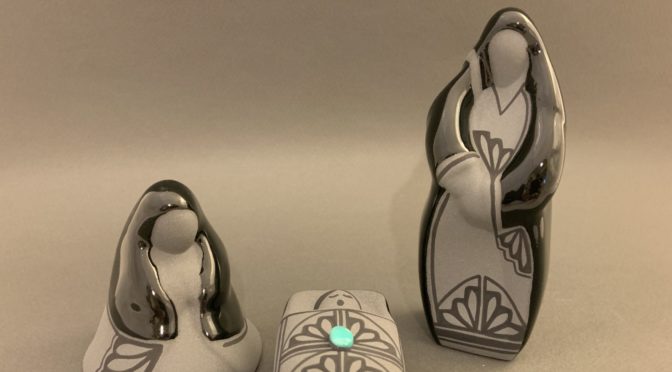
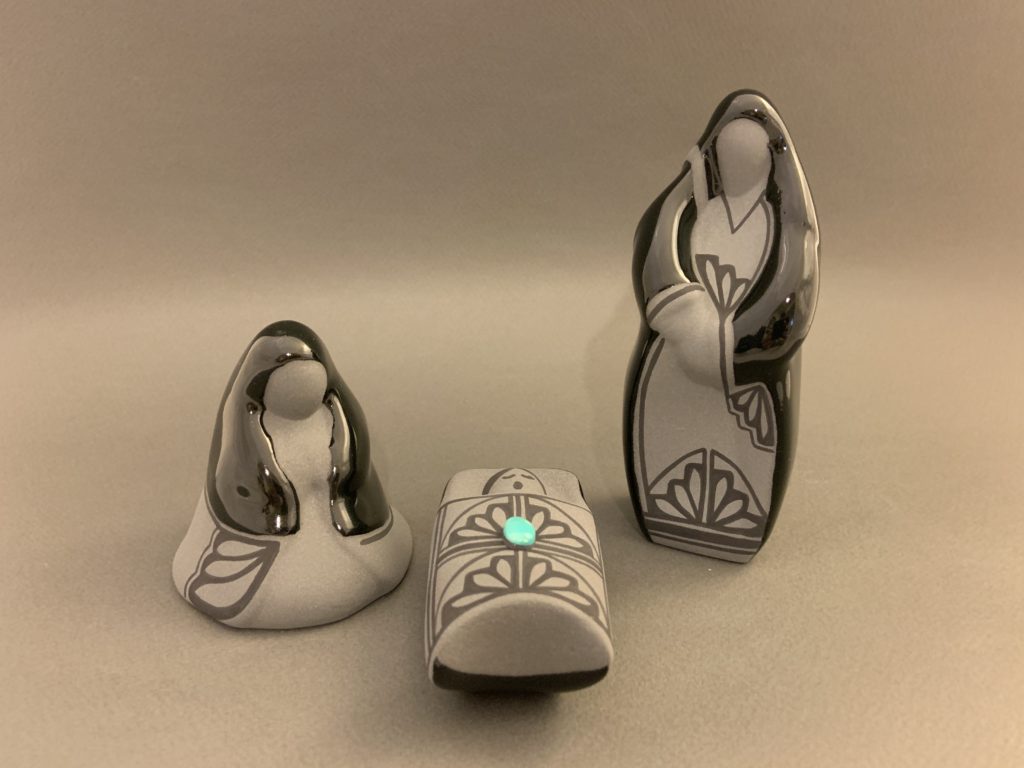
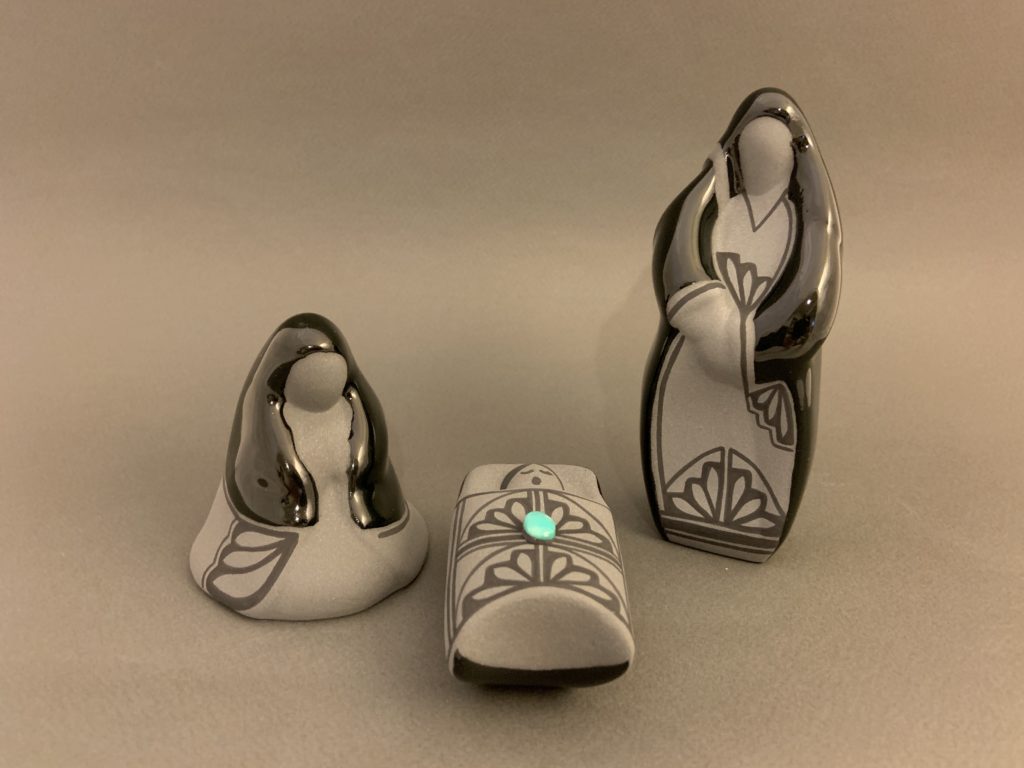
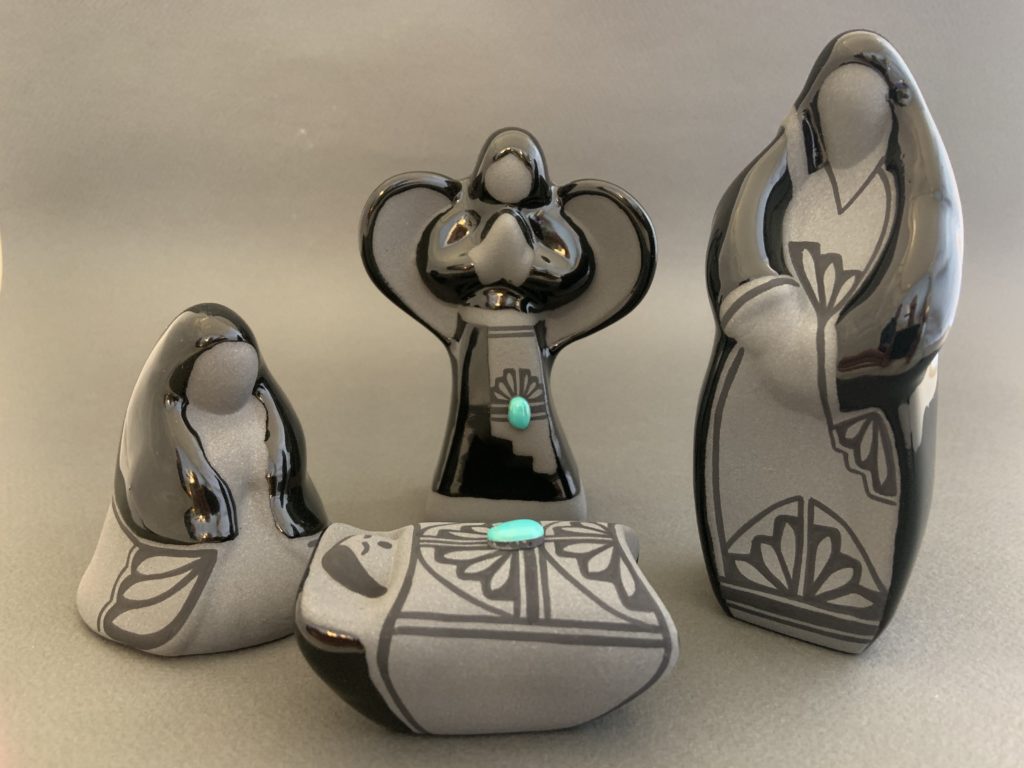
This Holy Family in blackware pottery was created by Lawrence Vargas.

Mr. Vargas is a self-taught artist from New Mexico. He works out of his studio with a view of Petroglyphs National Monument near Albuquerque, NM together with members of his family. His style is distinctive and is inspired by his multi-cultural ancestry. His work represents a unique blend of the different cultures found in the southwest.

A skilled and multi-talented artisan, Mr. Vargas’ artistic expressions comprise different subject matters and different mediums. He is best known for his blackware pottery, harvest maiden series and storyteller figures and paintings. His work is the result of a deep spiritual inspiration interwoven with his life experience.

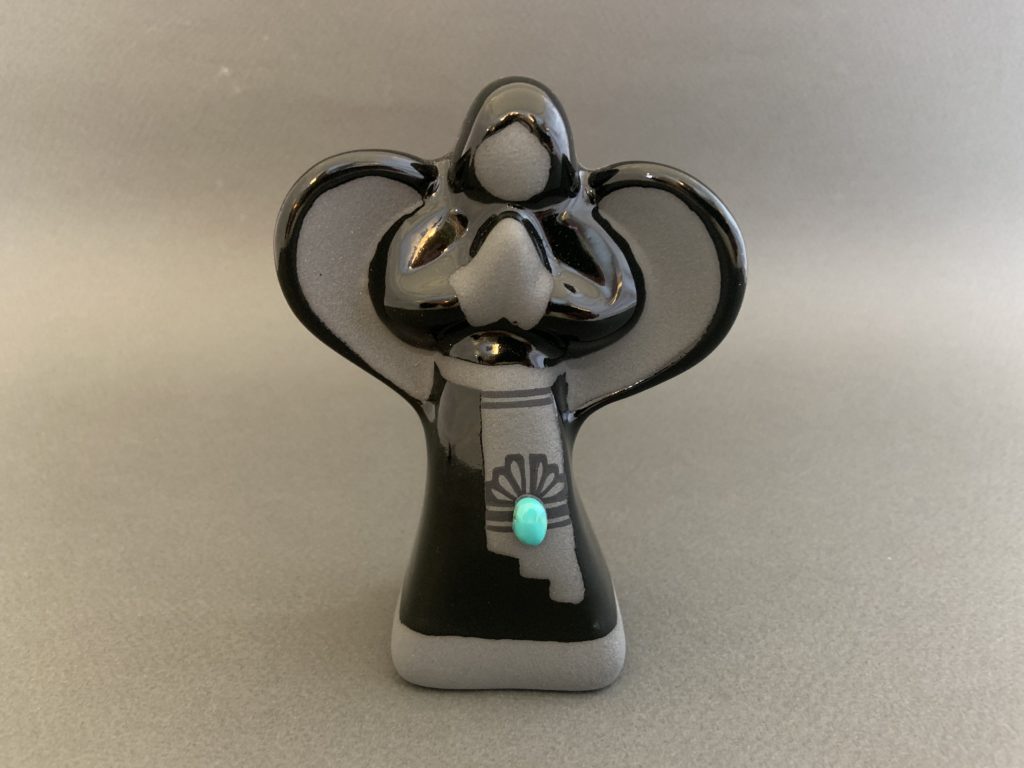
This nativity is hand painted blackware pottery. The use of both high gloss and matte finish on the jet-black clay creates a great contrast and allows for expressive representations in these otherwise semi-abstract figures. Some of the figures are enhanced with a characteristic piece of turquoise.

In addition to the Holy Family this nativity includes the three Magi who are represented as elders of the community. The typical ox and donkey have been replaced with two bison.

Santo Domingo Flight into Egypt

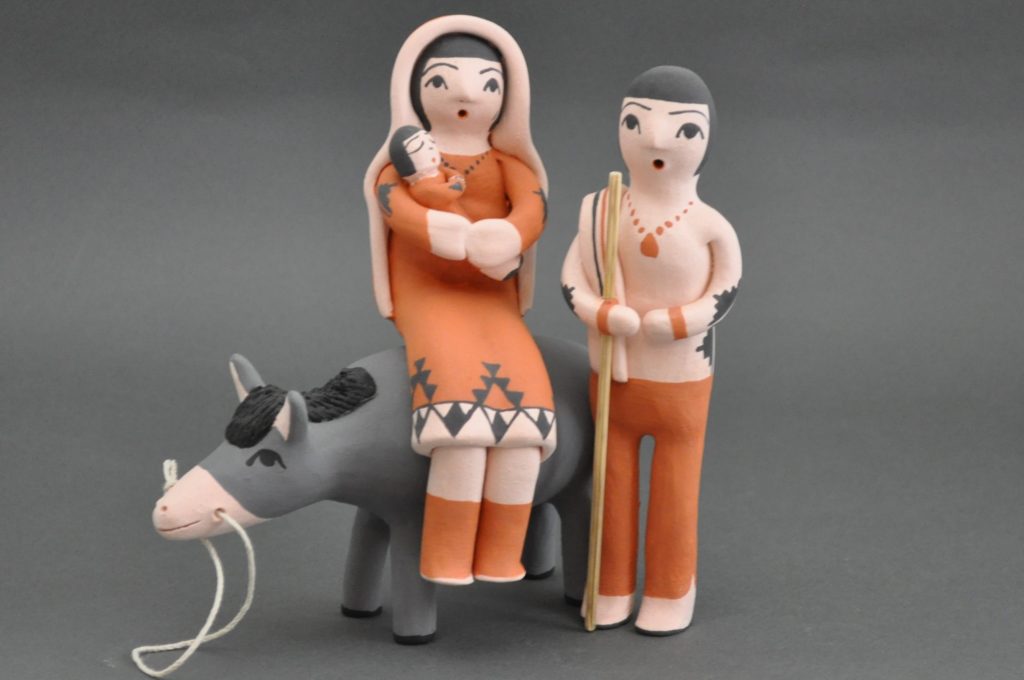
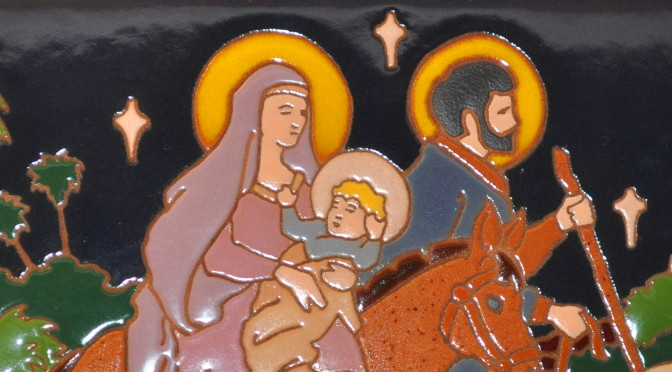
Depictions of the Flight into Egypt are rare in general, and they are even more rare among pueblo potters. Angel Bailon has been making nativities and angels for years. Her son suggested that she make a Flight into Egypt, and this is the result.

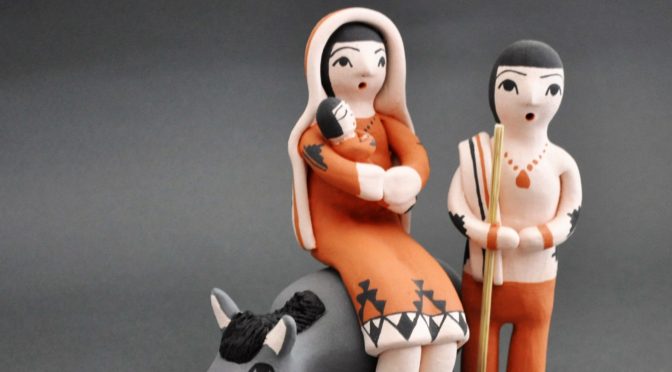
Joseph leads the donkey holding Mary and the Baby Jesus. He wears a folded blanket over his shoulder in formal pueblo style. All the painted decorations are traditional Santo Domingo Pueblo pottery designs. Santo Domingo Pueblo is about half way between Santa Fe and Albuquerque. The height of Mary on the donkey is six inches tall (15 cm.). 

Angel Bailon is originally from the Jemez Pueblo, but married into the Santo Domingo Pueblo where here husband, Ralph is from. She has been making pottery since 1979. She was taught by her mother, Marie Coriz, and specializes in storytellers, nativity sets, and necklaces. She signs each piece A & R Bailon.

Jemez Pueblo Nativity

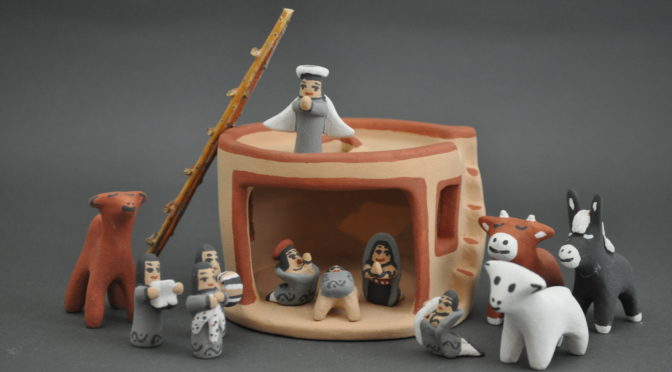
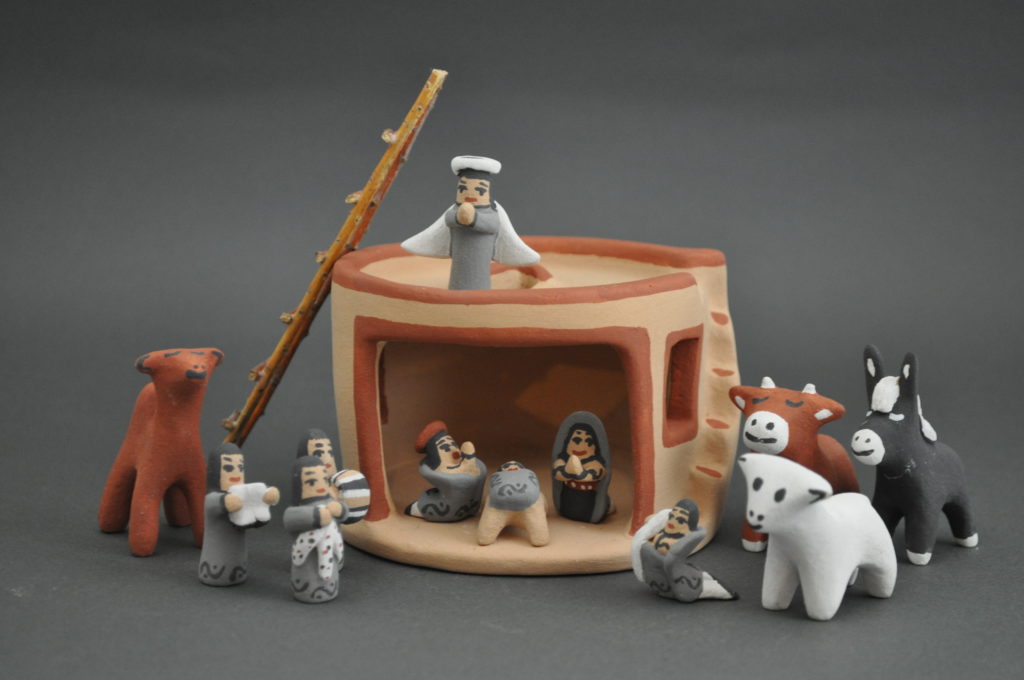
Santana Seonia depicts the nativity inside a kiva, the ceremonial chamber for New Mexico pueblos. Typically, kivas are round. This one has steps to the top and a ladder to descend into the chamber. A small pottery angel sits on top of the roof. Mary and Joseph and Baby are shown in the cut out side of the kiva. Three wise men are kneeling outside the kiva, and each one holds a pueblo style gift. A shepherd with a staff and four animals are also outside. Then animals outside the humans. The kiva is three inches tall.

Each piece is hand-formed from clay found at the pueblo, sun-dried and fired in a Horno oven, then painted in the pueblo’s traditional shades of brown, black, grey and rust. 

Navajo Folk Art Nativity

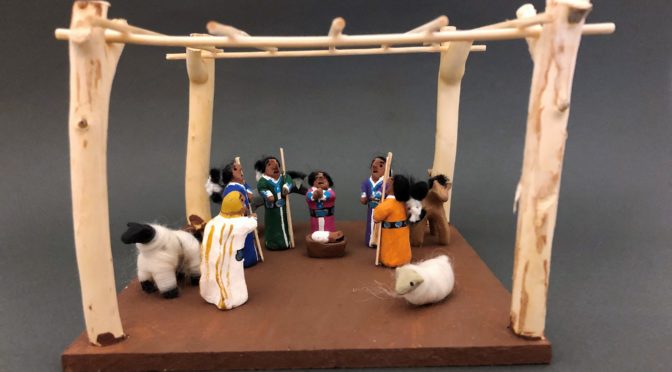
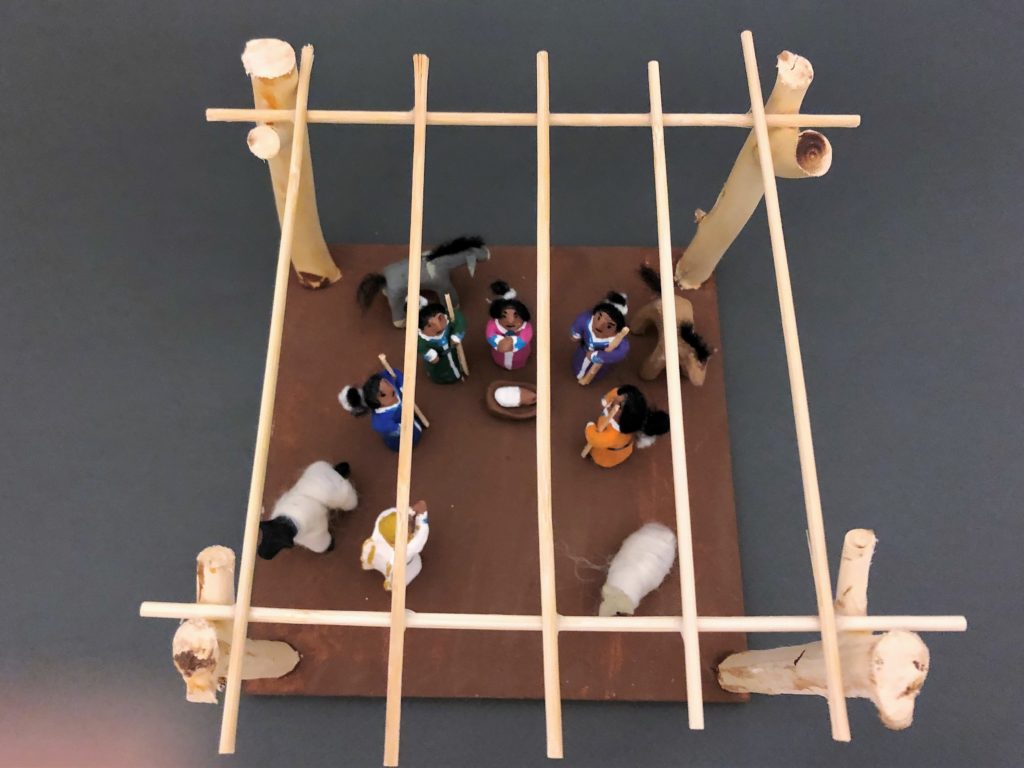
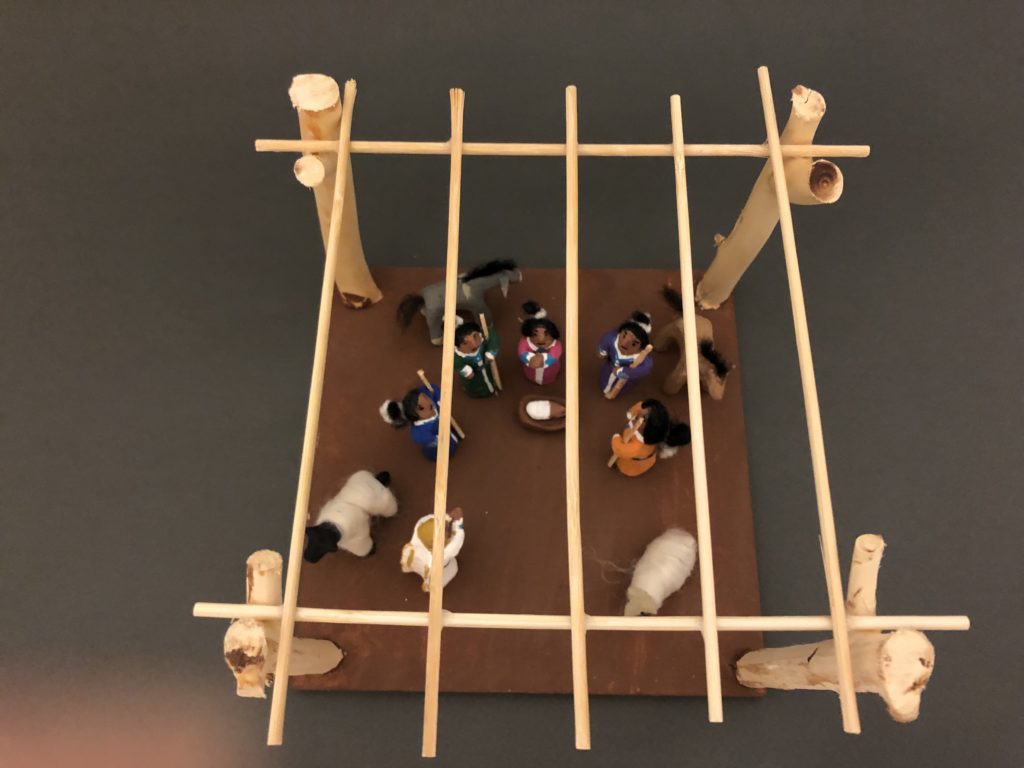
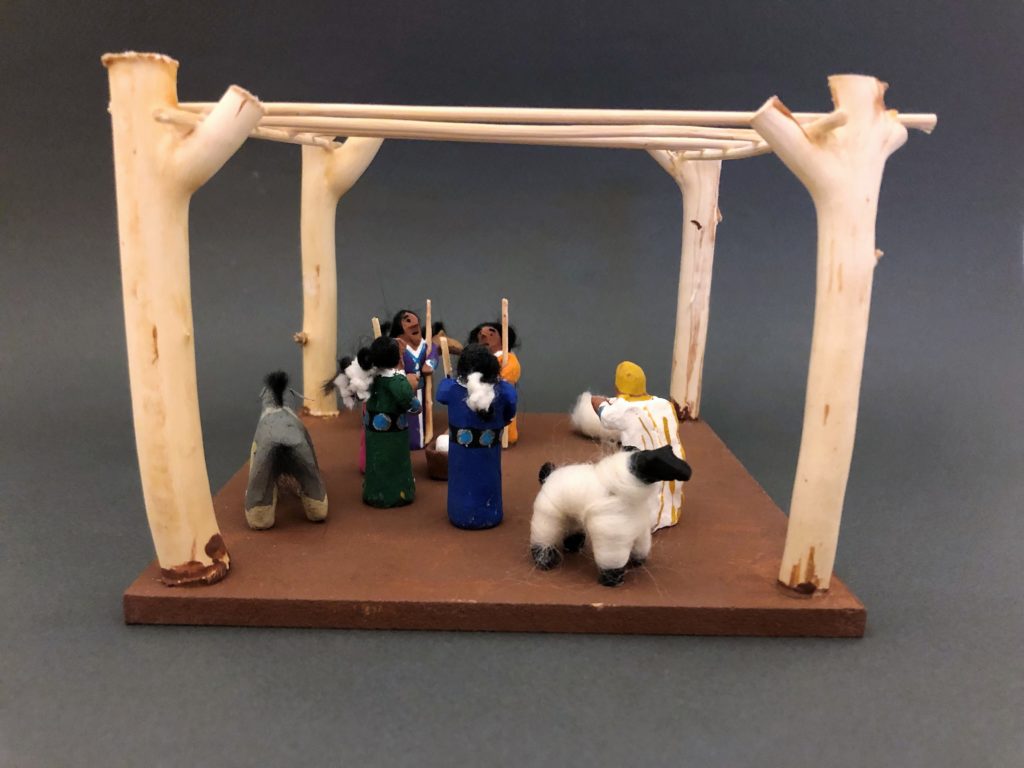
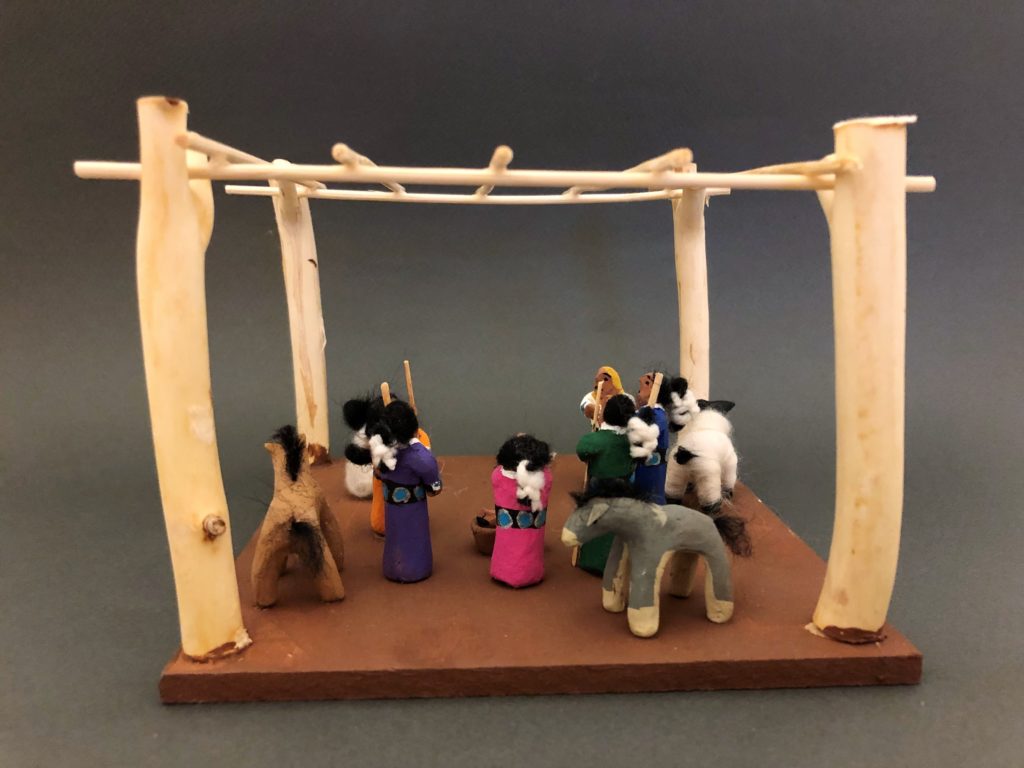
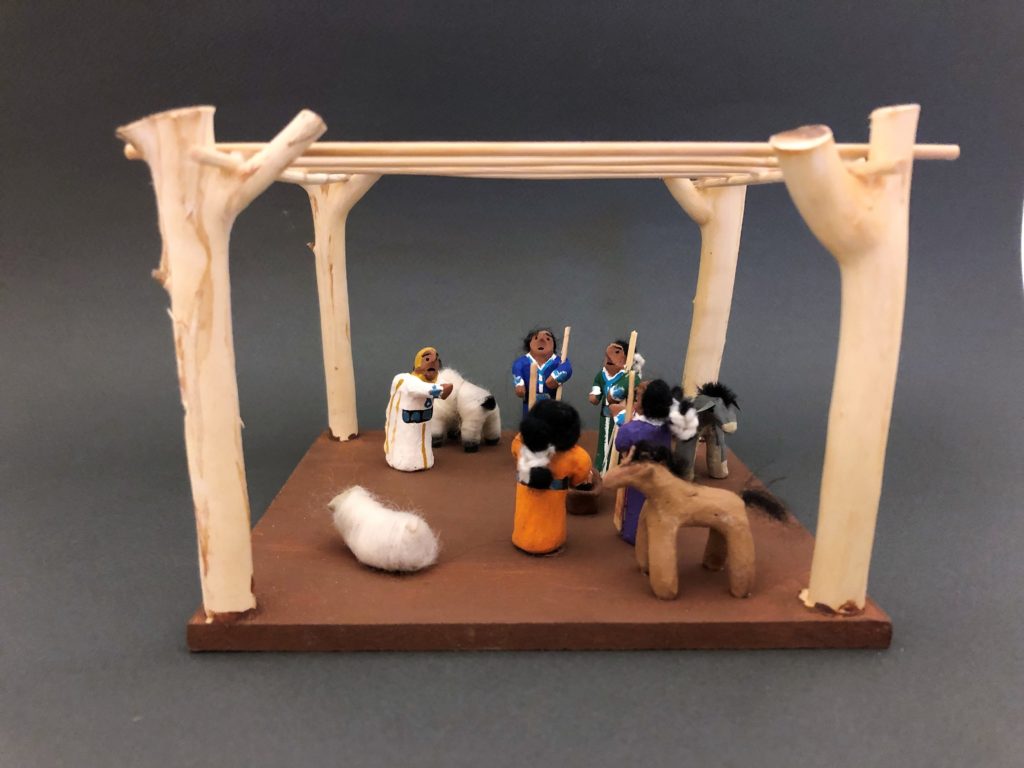
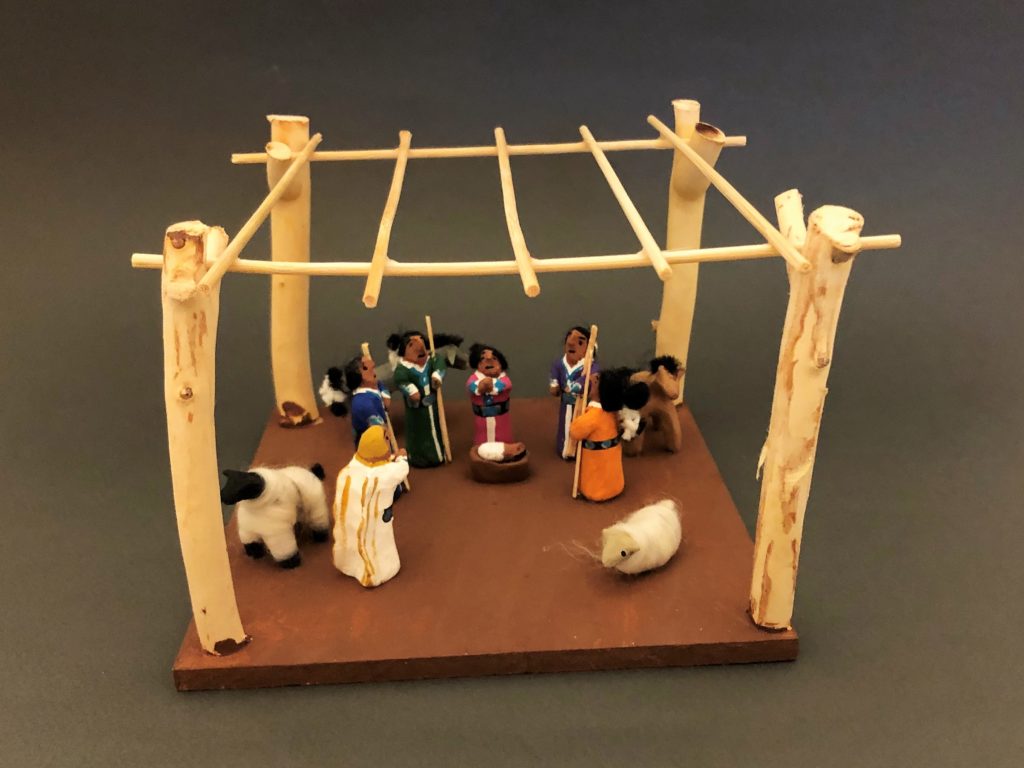
This Nativity by Nina Malone sets the birth of Jesus in a Navajo context. There are eleven figures in total: Mary, Joseph and the Christ Child, three Magi, a donkey and an ox, and two sheep. The different pieces have been glued onto the base.

The nativity is handmade from natural clay in Navajo Folk Art style. These kind of figurines are known as Mud Toys. Each piece is individually hand formed. Mud toys are often sun baked and not fired like traditional pottery. Each figurine is painted with acryclic paint.

Rustic Holy Family

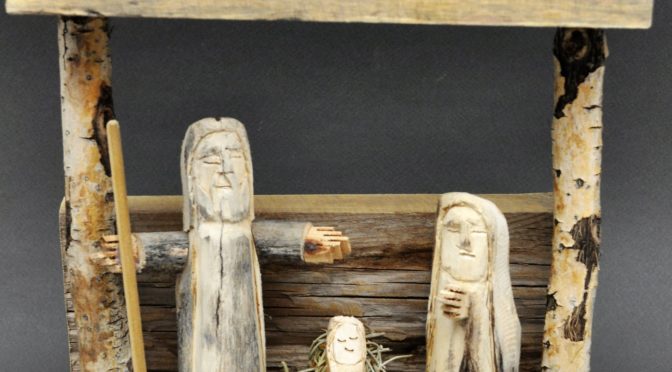
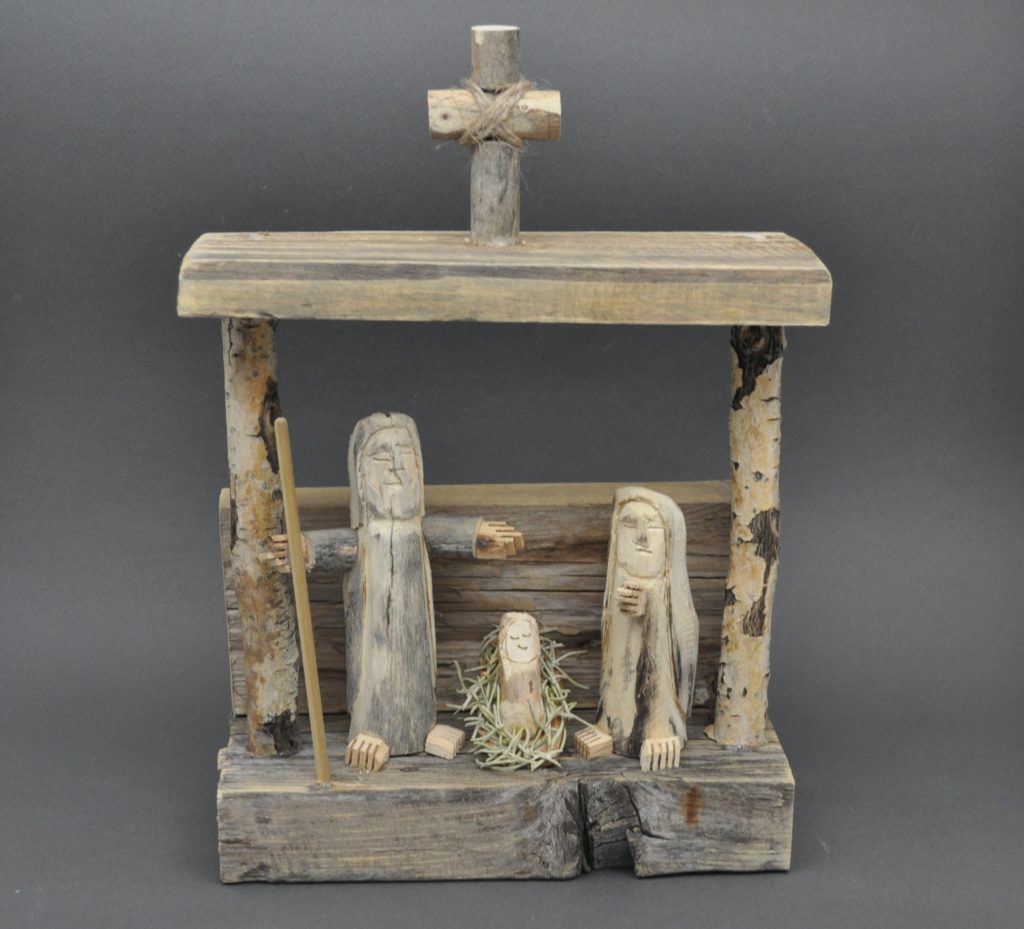
This rustic Holy Family which depicts Mary, Joseph and the Christ Child in a stable was carved by Hector Rascon. The simplicity of design and material highlight the fact that the Christ Child was born in poverty to a humble family.

Hector Rascon learned the art of carving from his father-in-law, and famous artist, Ben Ortega. Hector is perhaps best known for his carvings of St. Francis and angels which grace so many homes and gardens in Northern NM.

Hector carves his pieces from cottonwood and follows the natural gentle bends in the wood. Each piece reflects its own personality and character dictated by the wood and the subject matter. Hector is one of Northern New Mexico’s most recognized folk artists. “This is my full-time work and I’m very proud of what I do. I love to carve and give every piece my full attention.”
Nambé Nativity

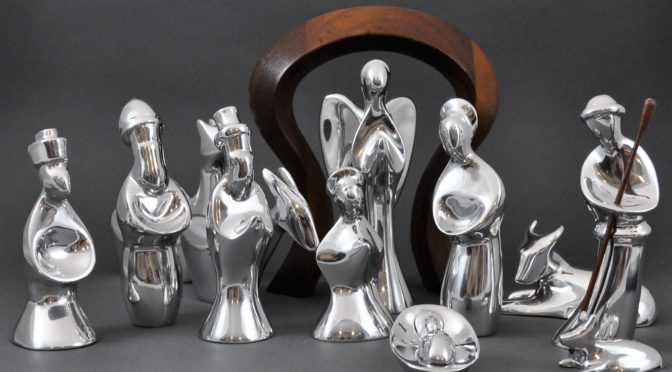
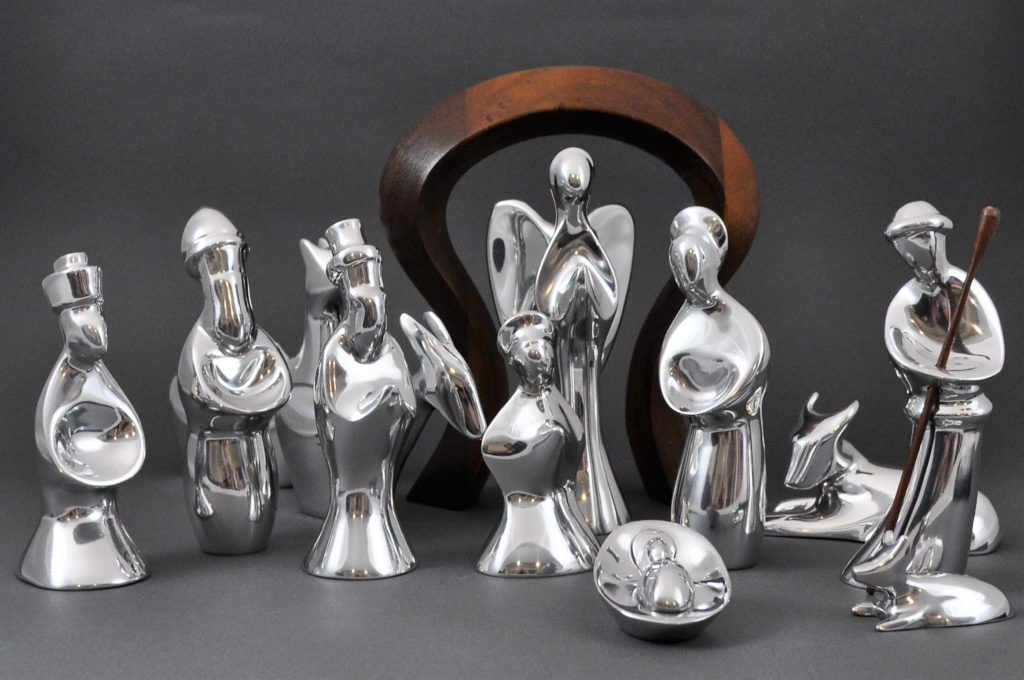
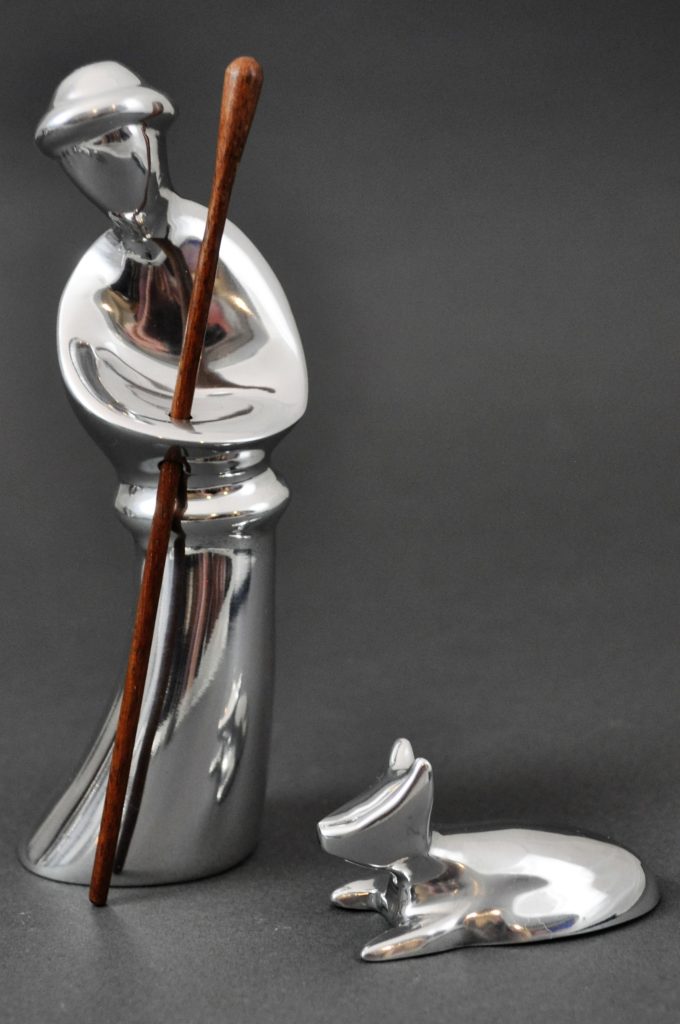
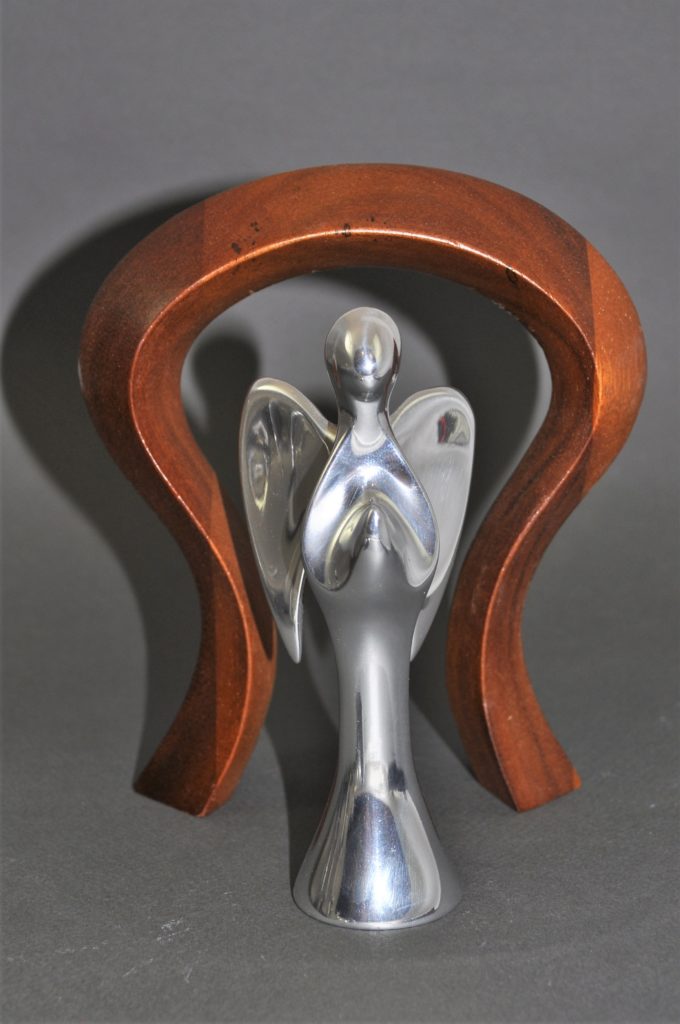
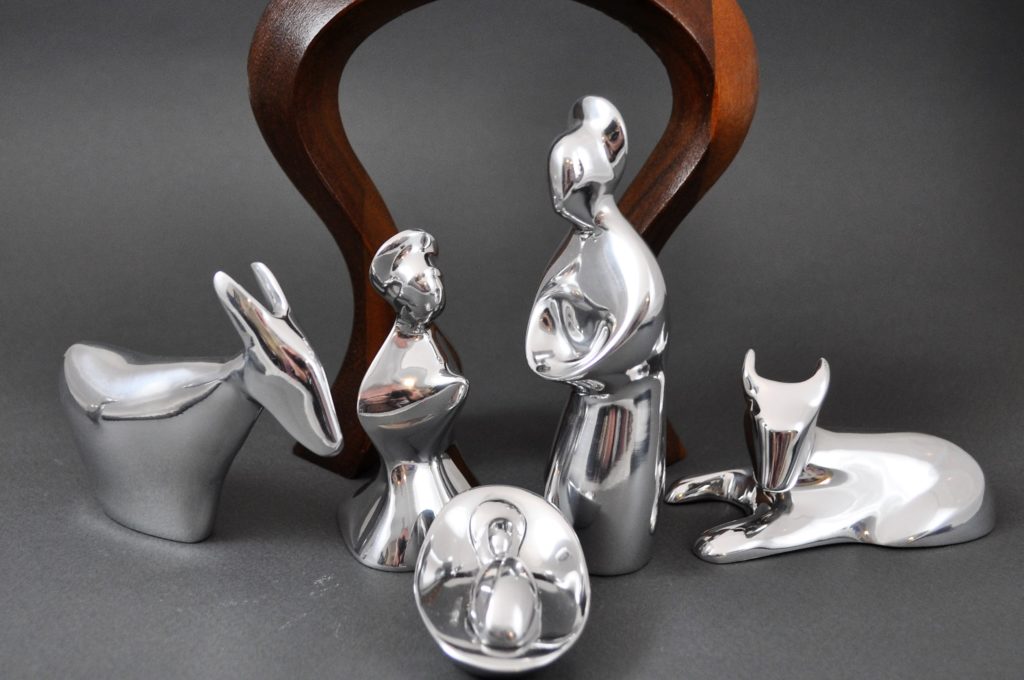
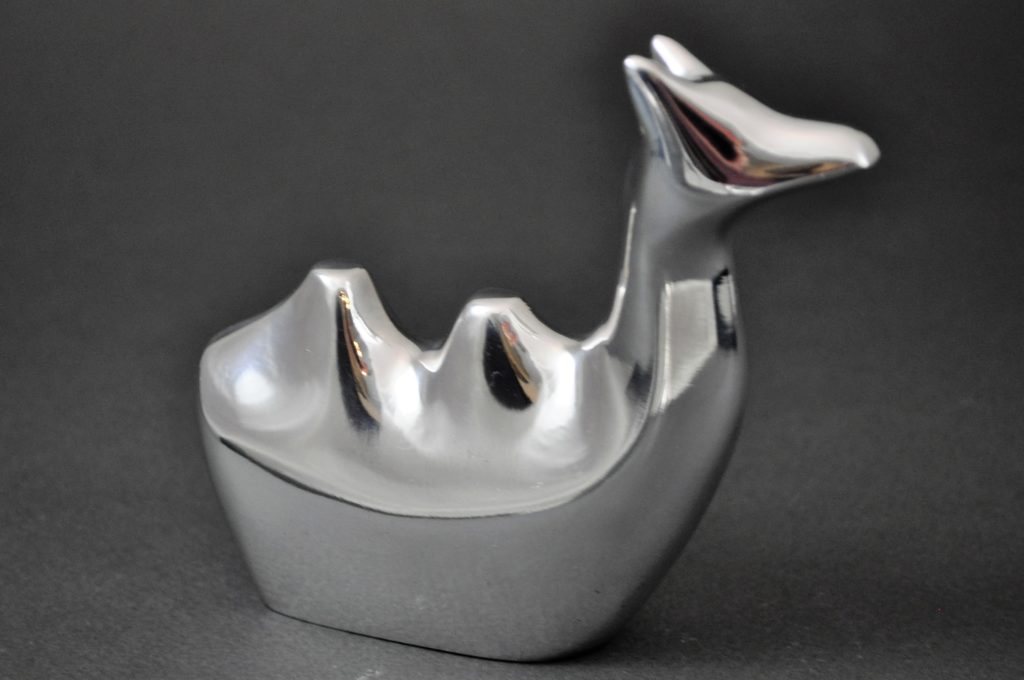
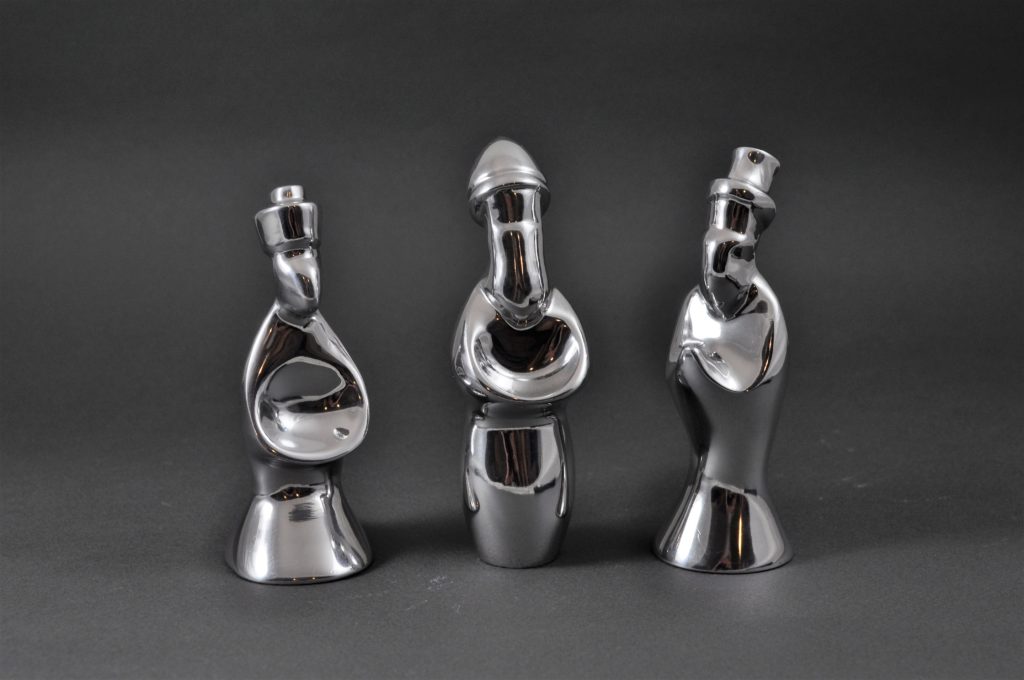
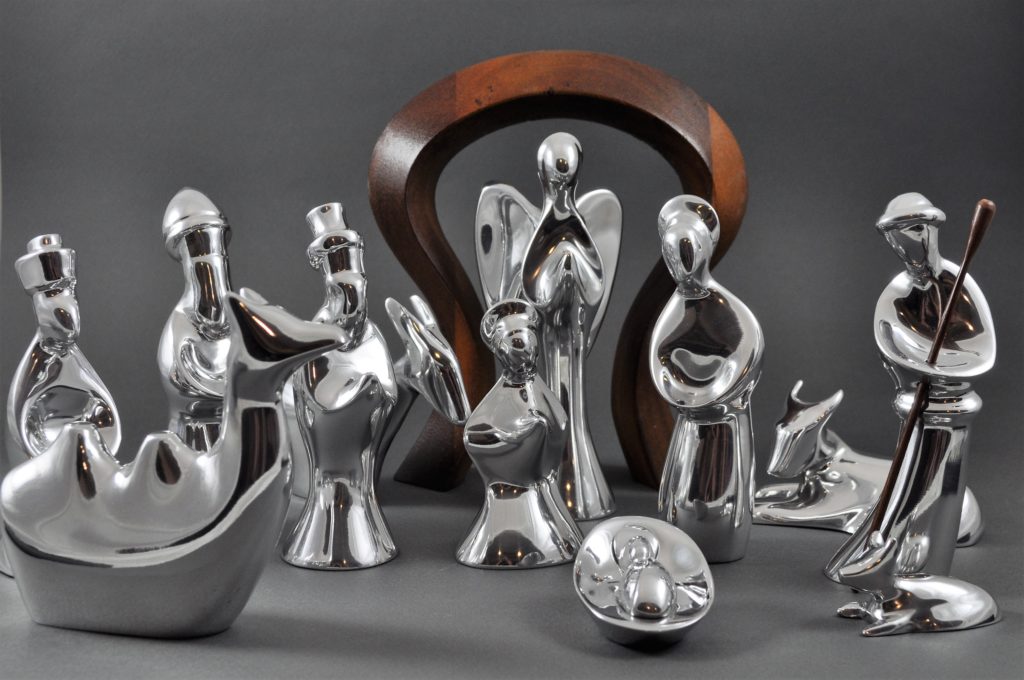
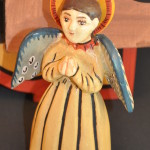
This 13-piece Nativity, designed by Alvaro Uribe is crafted in lustrous Nambé Alloy and rich acacia wood. With heads bowed, Mary and Joseph gaze affectionately at baby Jesus lying in his manger in front of a beautifully arched crèche of carved acacia wood. Onlookers include an angel, the three magi and their camel, a shepherd with sheep, and an ox and donkey. The dimensions are: Crèche: 6.5”H, Joseph: 5.5”H, Mary: 4”H, Baby Jesus: 2”W x 1.5”H, Angel: 1.5”W x 5”H, Wise Man 1: 1.5” W x 4” H, Wise Man 2: 1.5” W x 4.5” H, Wise Man 3: 1.5” W x 4.5” H, Shepherd: 2” W x 4.5” H, Lamb: 2” L x 1” H, Donkey: 3.5” L x 3” H, Camel: 4” L x 4” H, Ox: 4” L x 2” H.

Reproduction Nacimiento

This nativity is somewhat controversial. Its proto-type in Spanish colonial style was created by renowned santero and mass-produced from a mold with resin, a fragile plastic-like material.


Continue reading

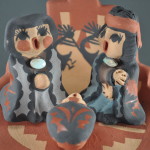
Jemez Holy Family

Cindy Fragua is a pottery maker from Jemez Pueblo. She learned to make pottery from her older sisters who in turn were taught by their mother Grace Loretto Fragua and grandmother Emilia Loretto.

Jemez pottery tradition experienced a great revival in the 20th century after a decline following the 1680 Pueblo Revolt. Today’s Jemez pottery blends ancient techniques with contemporary innovation. Potters use locally gathered red clay and natural dyes to create their signature earth tones.
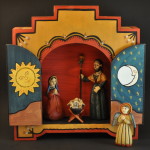
A typical Jemez geometric symbol is the Kiva steps which takes the form of stairs and symbolizes life’s journey from birth to afterlife. Typical figures are the storytellers with their heads slightly tilted up and open mouths. During the winter months, story telling was a daily occurrence when at night the elders told ancient tribal stories.
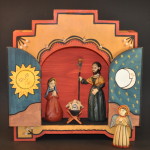
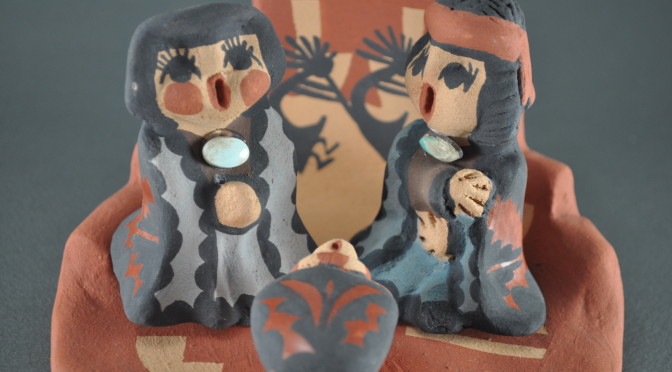
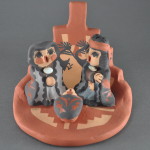
This holy family is modeled after story tellers with Mary and Joseph looking up and Jesus, Mary and Joseph having their mouth open. They are depicted as telling the story of the great mystery of salvation.

Their dwelling is decorated with Kiva steps both in the design of the stepped back of the building and the painted decorations on the floor of the structure.

The angels who are often present in depictions of the nativity were replaced by Ms. Fragua with typical Puebloan Kokopelli. These humpbacked, flute-playing figures with antenna-like protrusions on their head are associated with music, joy, the miracle of birth and the celebration of life.