Category Archives: Nativities

Vertep Nativity

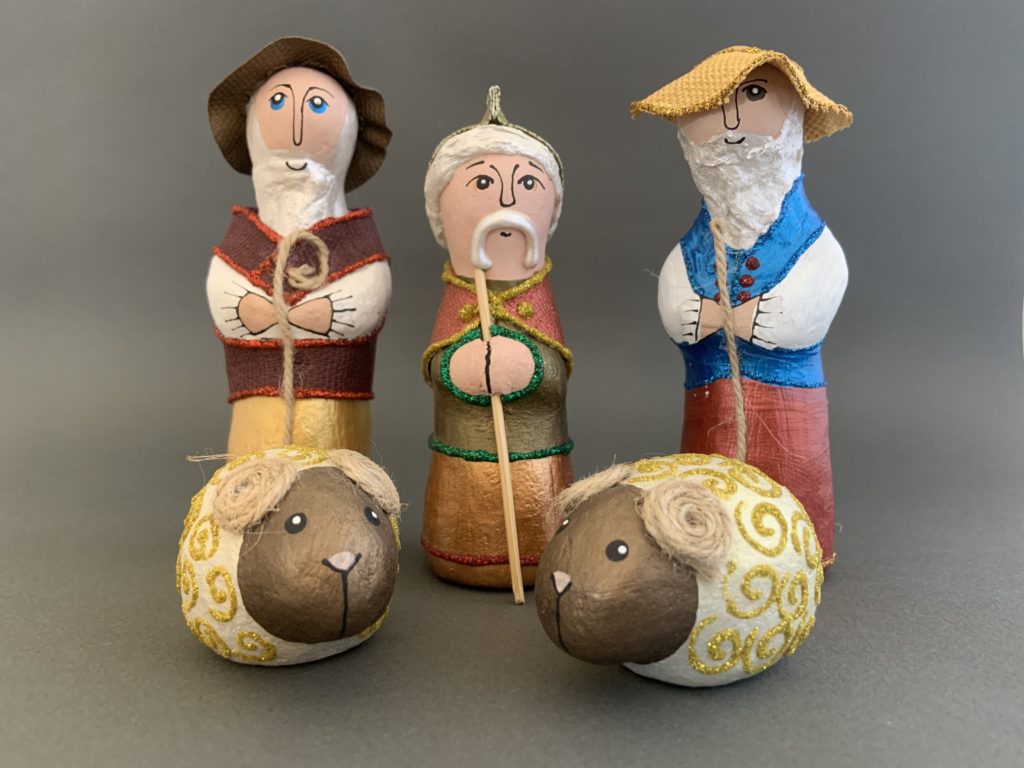
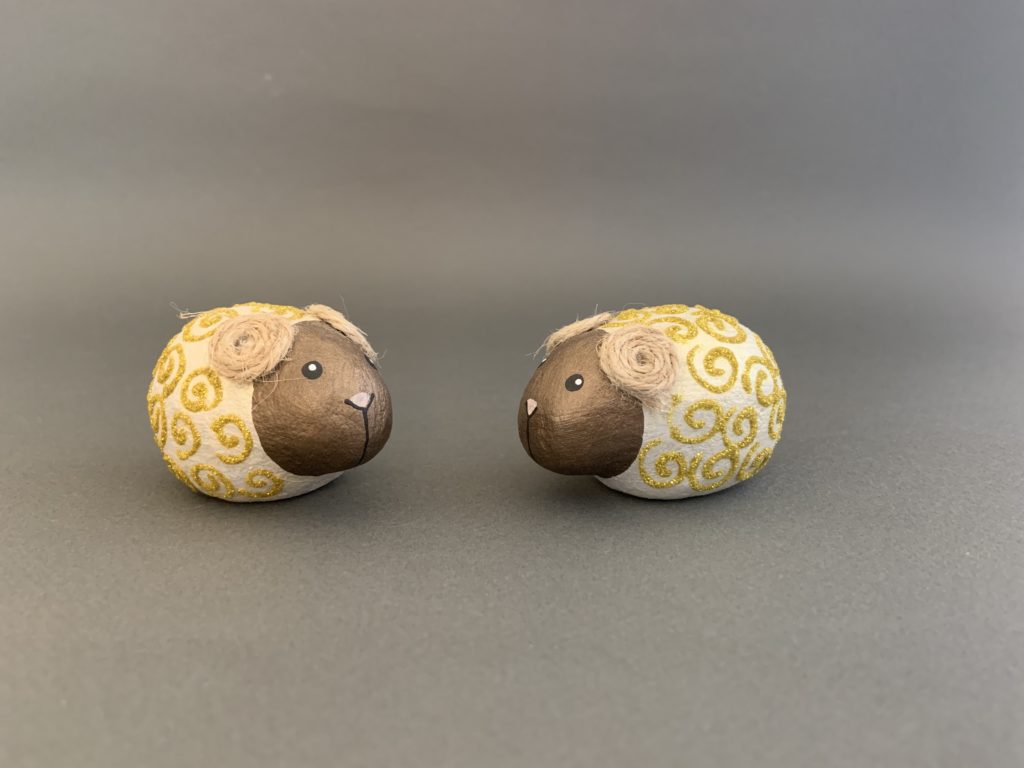
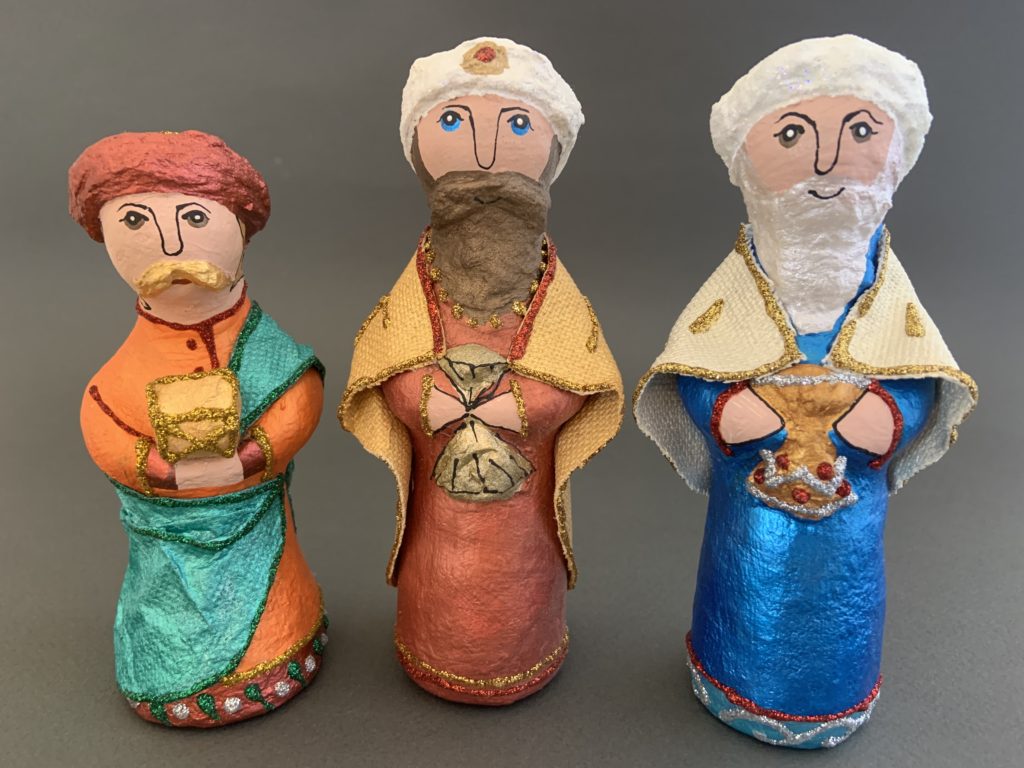
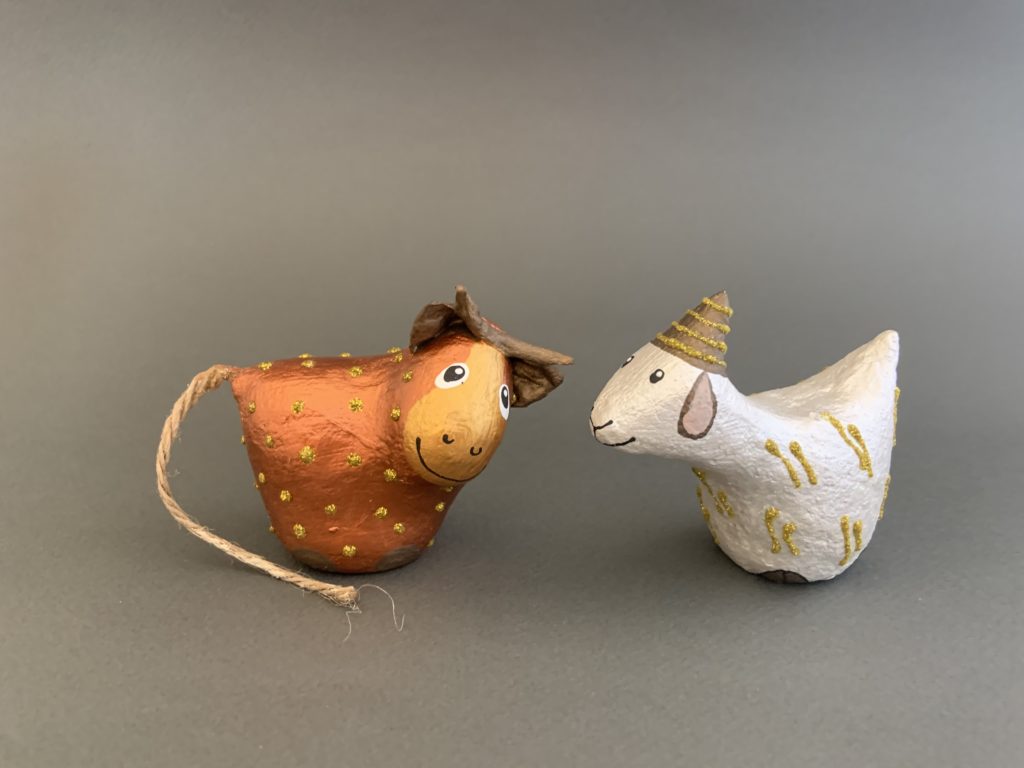
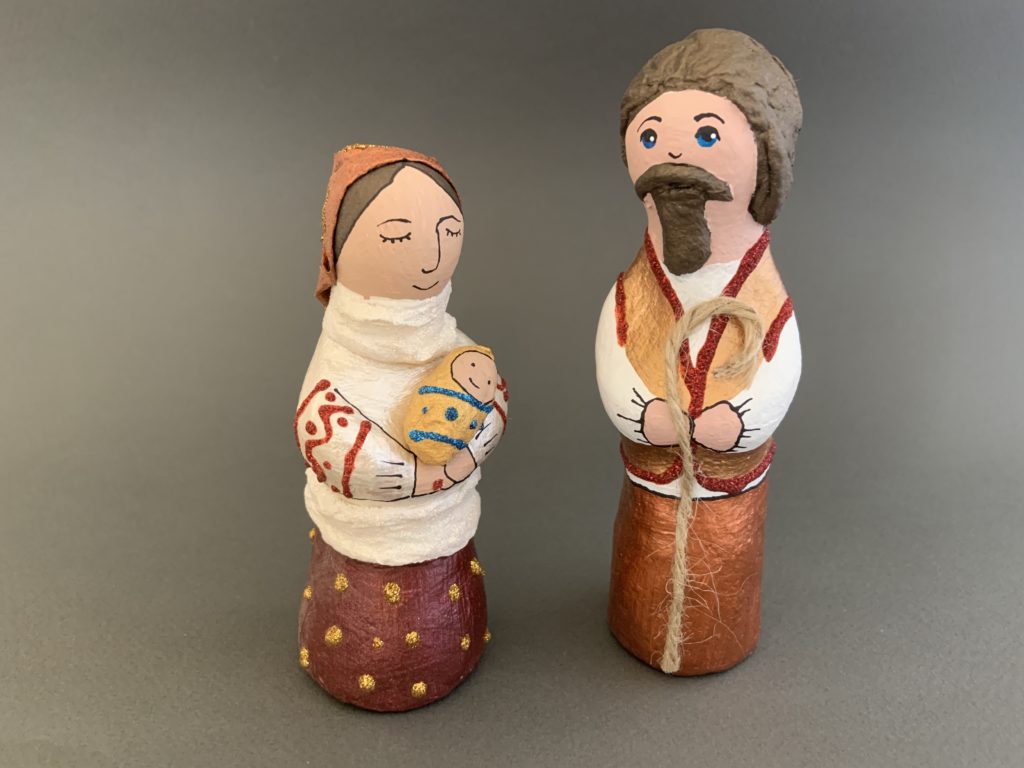
The tradition of Christmas Puppet Theater, known as Vertep has been popular in Ukraine since around the year 1700. The word Vertep is rooted in the old Slavonik word for “cave.” Which is of course a reference to the place of Jesus’ birth.

The box which is used for the Vertep is known as a Shopka from the Polish word for box. This box is taken from home to home in the village or town for a series of performances of the Vertep. There are usually two segments to the Vertep: first, the enactment of the Christmas story accompanied by carols; second, a secular often comedic story based on local history or culture. Because of this the shopka often has two levels, the upper level for the sacred story and the lower level for the secular story.

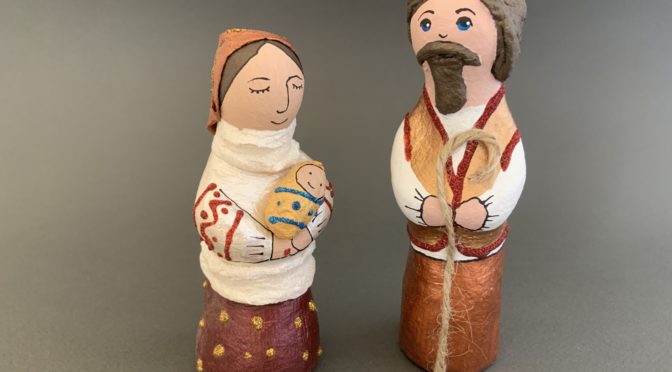
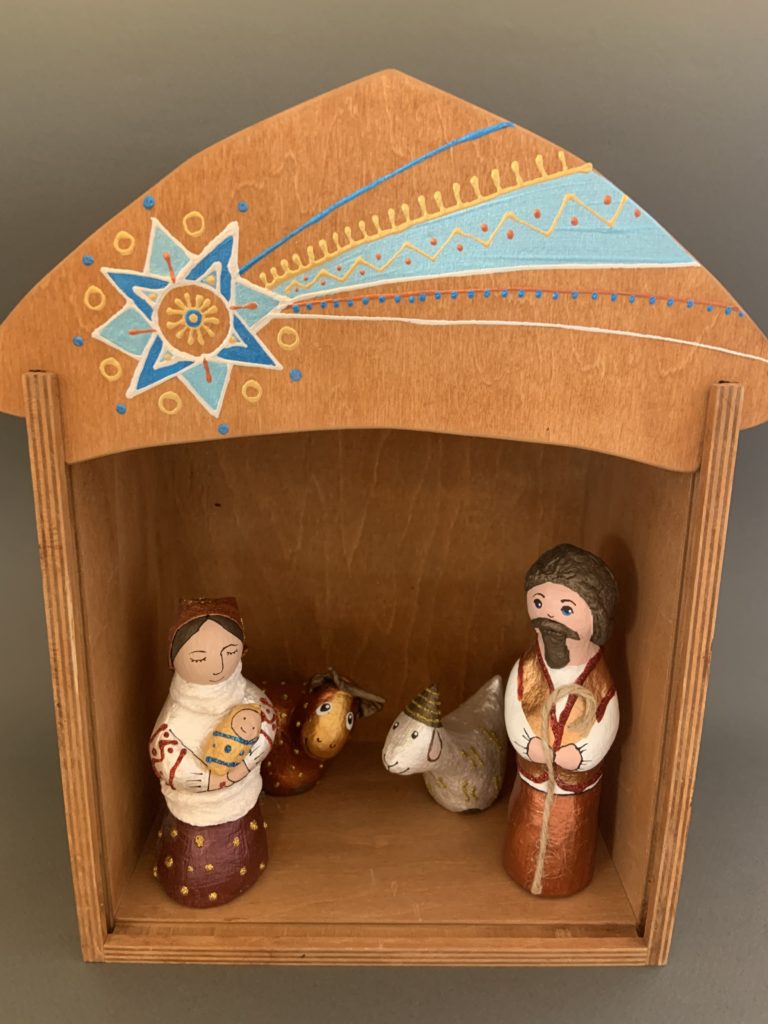
This Ukrainian nativity is inspired by the Vertep tradition with its puppet-like figures that are housed in a decoratively painted wooden box which functions both for storage and when assembled as the stable for the Nativity.

The finely detailed figures are hand made using different natural materials that are molded, baked, sanded, glazed, dressed and finally painted.

Joseph measures a little more than 5 inches tall. The box measures 8.5 x 8.5 x 5 inches when closed.

This nativity was certified “environmentally responsible” by the certification of Ukrainian public organization “Living Planet.”
Kokeshi Nativity

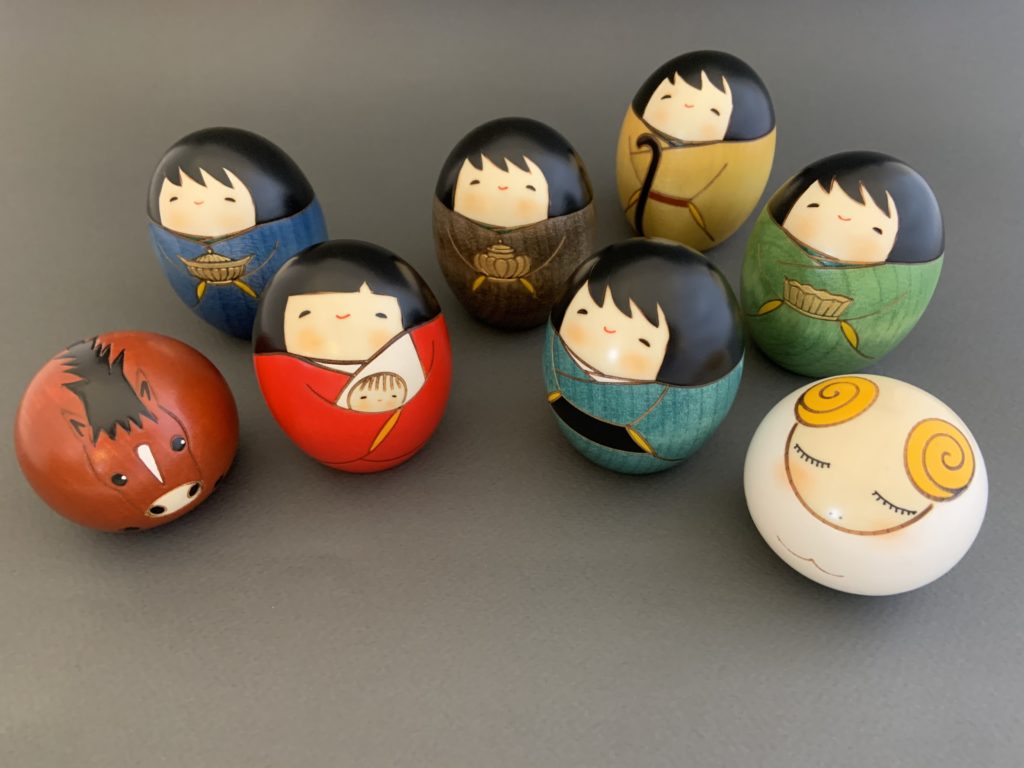
Traditional Kokeshi dolls began to be made about two hundred years ago in the north east region of Japan known as the Tohoku region. It is commonly believed that the 18th C.  Kijiya or woodworkers who originally specialized in household utensils began to make small dolls which they sold to the tourists who came to bathe in the many onsens or hot springs near their villages.

Kokeshi dolls traditionally consist of a basic cylindrical limbless body and a round head. Though the first dolls might have been unpainted, today most Kokeshi are painted in bright colors. The traditional colors used were red, yellow and purple. The woods used for Kokeshi vary though dogwood most popular.

Kokeshi is recognized as one of the traditional folk arts of Japan.

This nativity was made in the Usaburo Kokeshi workshop in Shibukawa in the Gunma prefecture. This workshop was started by Usaburo Okamoto in 1950. Mr. Usaburo was born in Shinto in 1917 and died in 2009.

What sets this Kokeshi Studio apart from others is that Mr. Usaburo introduced new styles and developed new techniques for the creation of his Kokeshi.

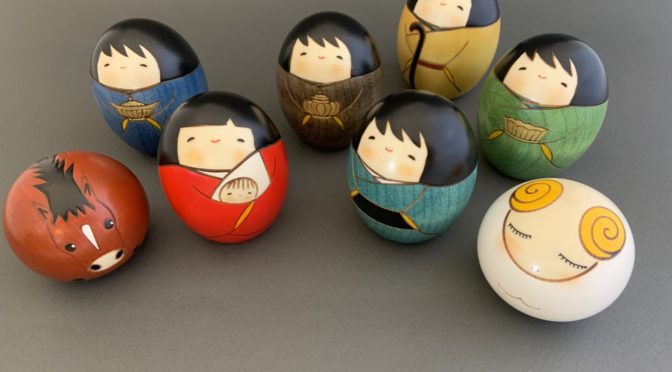
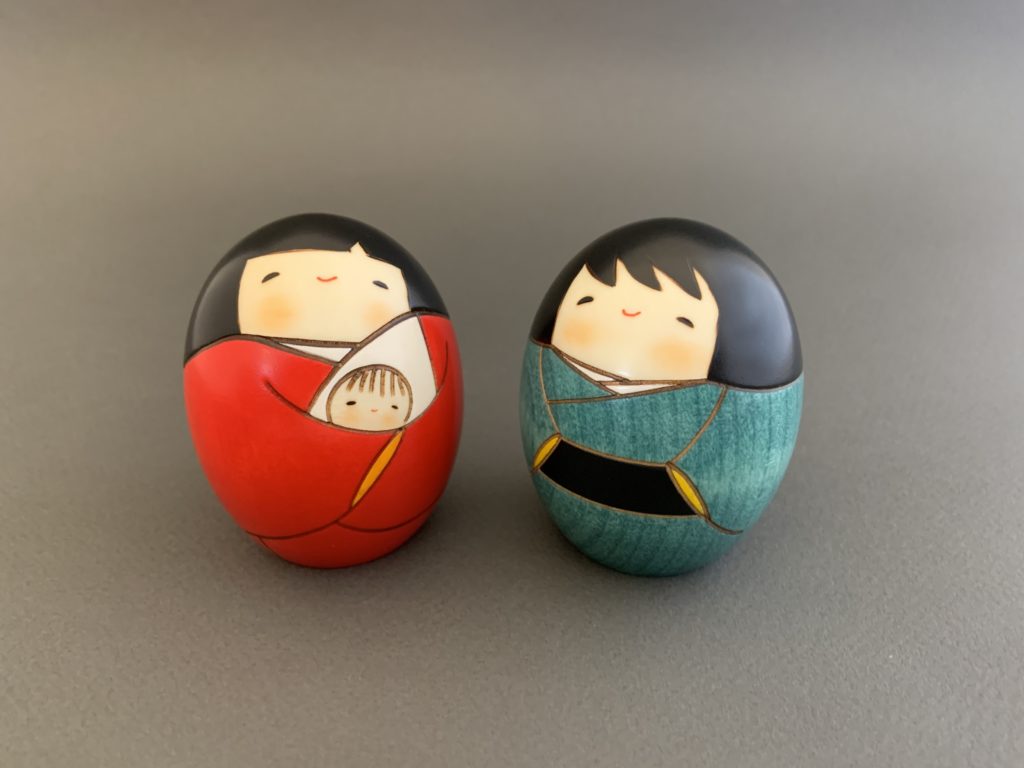
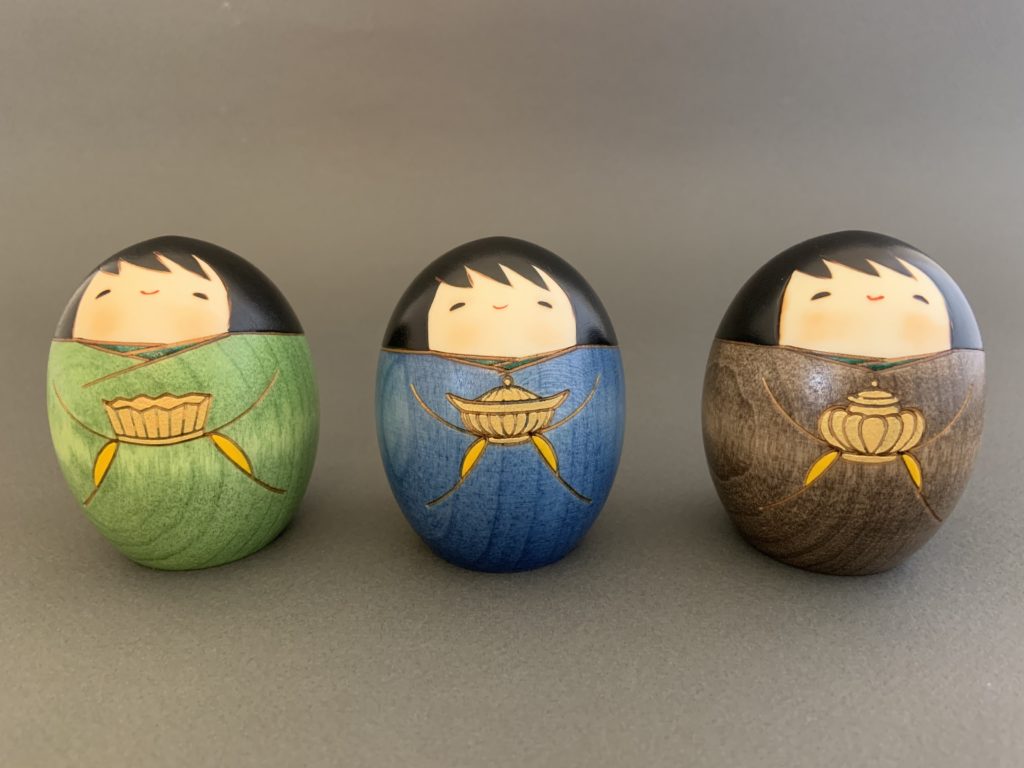
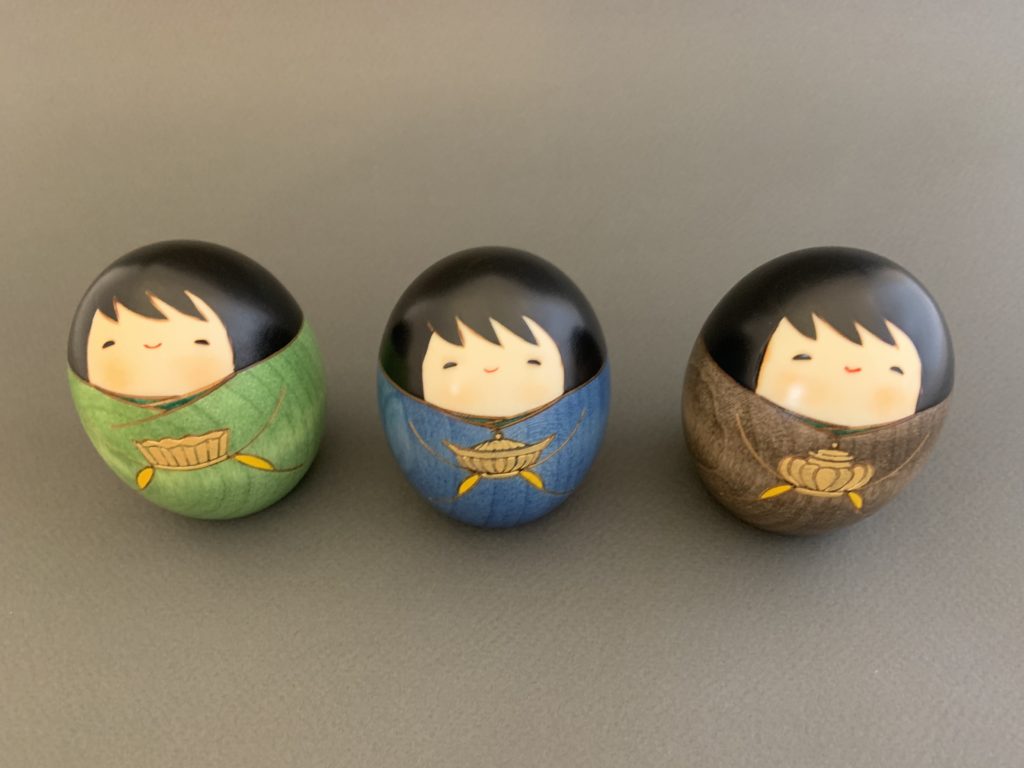
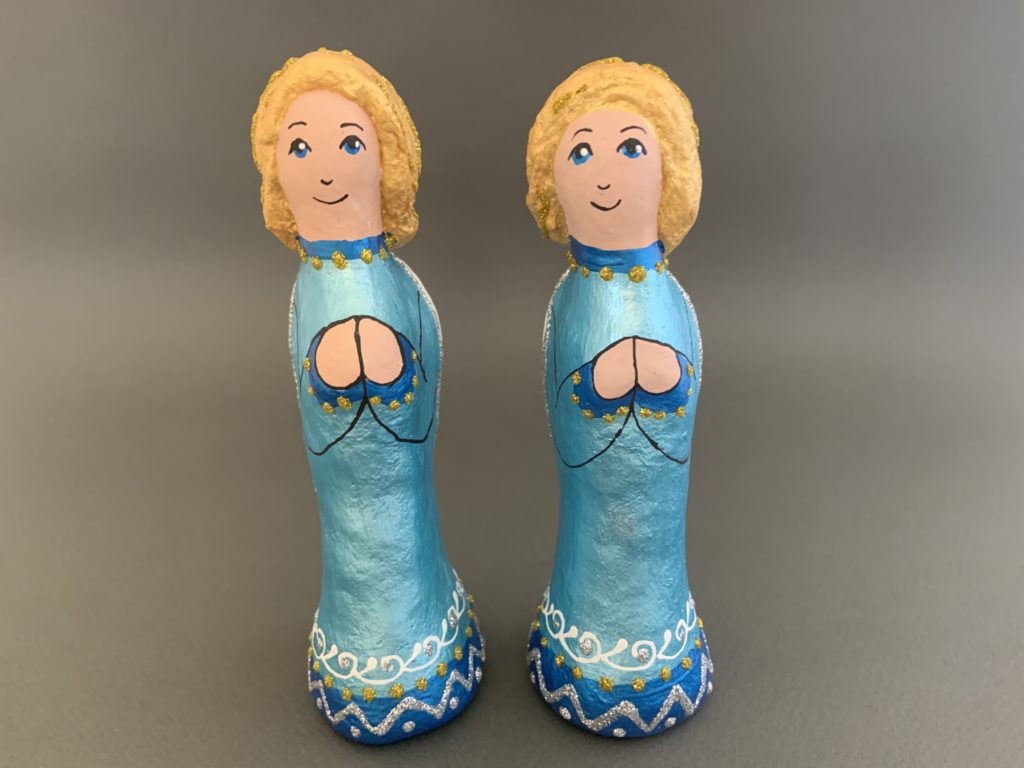
This Nativity exemplifies Mr. Usaburo’s innovations and is characteristic of the Kokeshi created in the Usaburo workshop. Each doll is egg shaped rather than having the traditional limbless body with a round head. Also, they are decorated using a method of carving and burning with Nichrome wire in addition to the traditional brushes and paint.

Usaburo Okamoto won numerous prizes for his work, including the Prize of the Minister of International Trade and Industry.

Santo Domingo Flight into Egypt

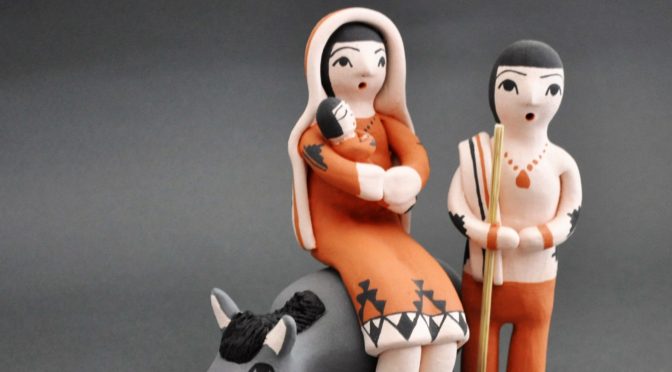
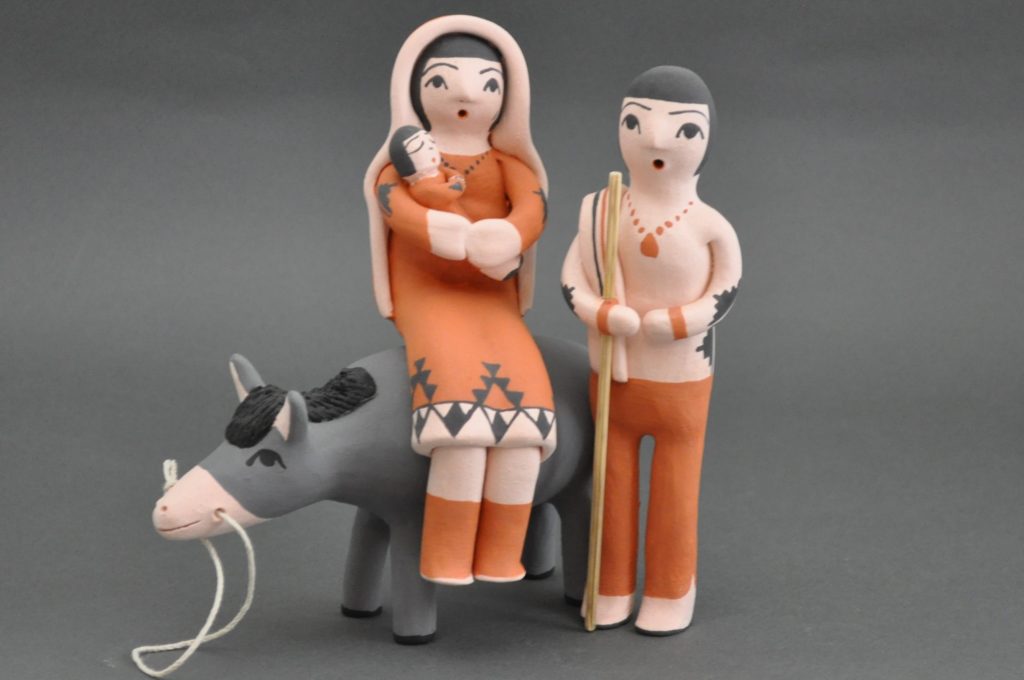
Depictions of the Flight into Egypt are rare in general, and they are even more rare among pueblo potters. Angel Bailon has been making nativities and angels for years. Her son suggested that she make a Flight into Egypt, and this is the result.

Joseph leads the donkey holding Mary and the Baby Jesus. He wears a folded blanket over his shoulder in formal pueblo style. All the painted decorations are traditional Santo Domingo Pueblo pottery designs. Santo Domingo Pueblo is about half way between Santa Fe and Albuquerque. The height of Mary on the donkey is six inches tall (15 cm.). 

Angel Bailon is originally from the Jemez Pueblo, but married into the Santo Domingo Pueblo where here husband, Ralph is from. She has been making pottery since 1979. She was taught by her mother, Marie Coriz, and specializes in storytellers, nativity sets, and necklaces. She signs each piece A & R Bailon.

Nativité en Faïence

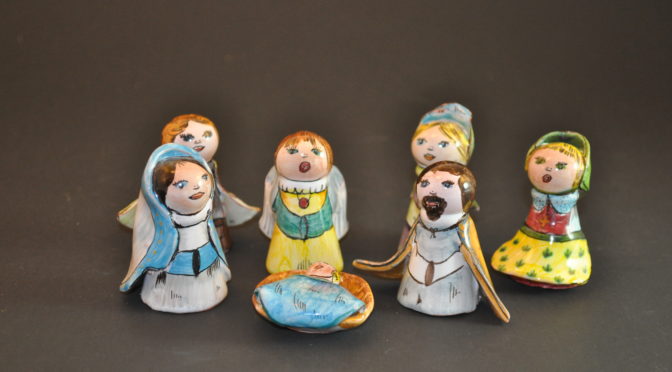
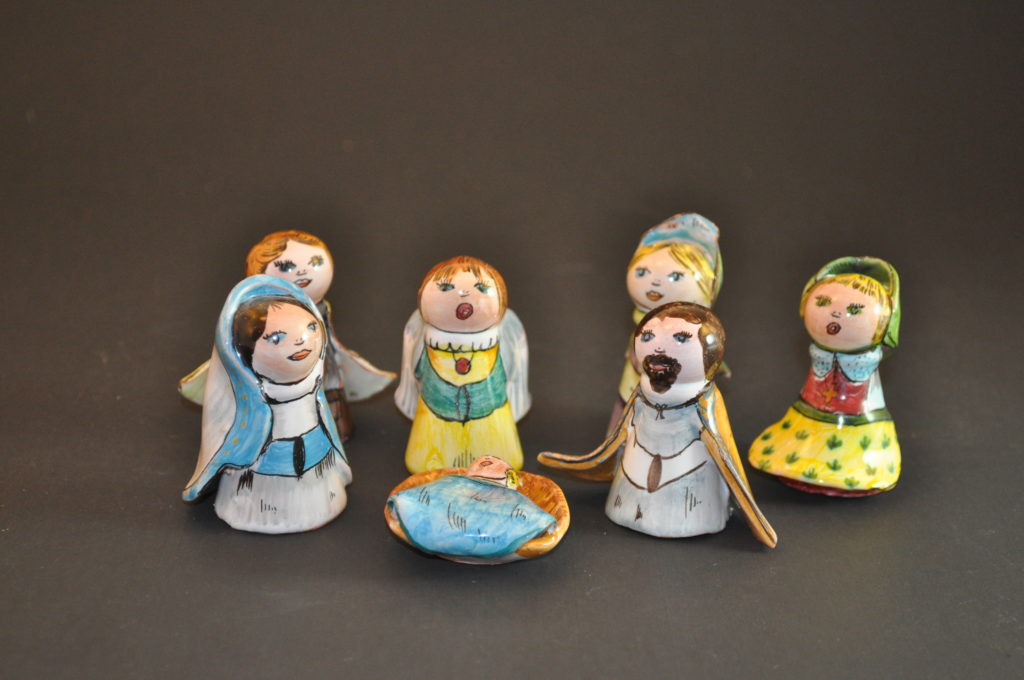
This delightful little nativity set from Provence was created at the studios of Lallier-á-Moustiers. In the typical tradition of Santons the artist replaced the traditional shepherds and Magi with towns people . They allow for the Holy Family to be set in a typical Provençal context. When you look closely at the faces it is as the angel and the towns people are singing. Maybe they are singing Christmas carols?

The history of faïence in Moustiers dates back to the 17th C. It is in this tradition that the Lallier family has worked as earthenware potters or faienciers  since 1946. They started in Paris, moved to Orleans and now have settled in Moustiers.

Jemez Pueblo Nativity

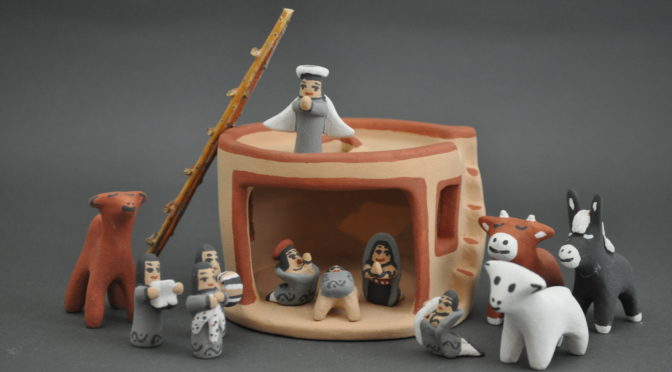
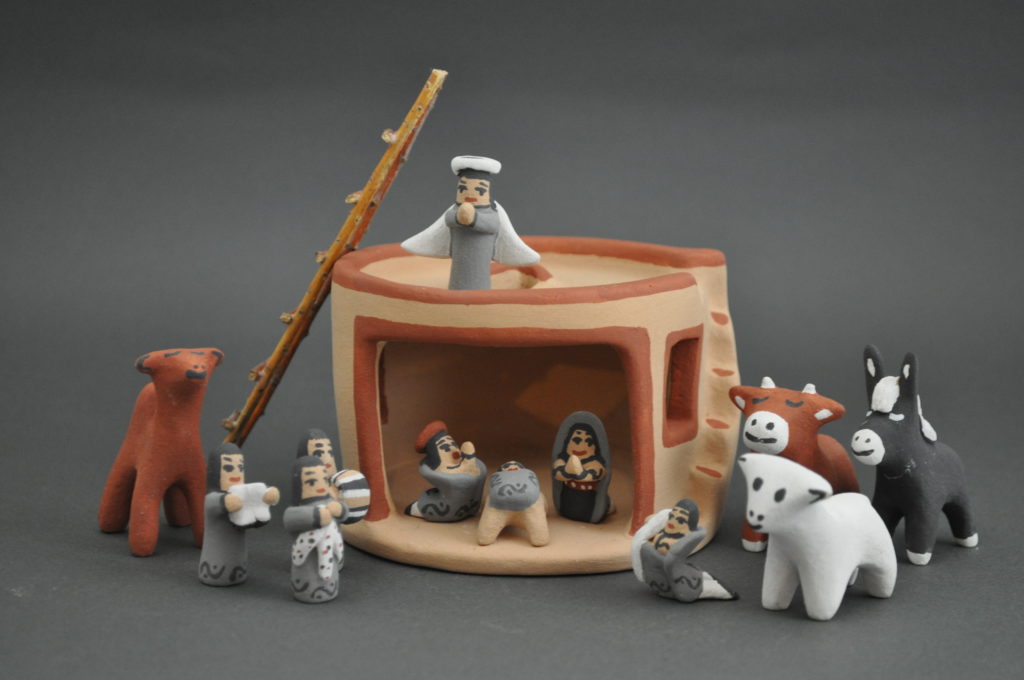
Santana Seonia depicts the nativity inside a kiva, the ceremonial chamber for New Mexico pueblos. Typically, kivas are round. This one has steps to the top and a ladder to descend into the chamber. A small pottery angel sits on top of the roof. Mary and Joseph and Baby are shown in the cut out side of the kiva. Three wise men are kneeling outside the kiva, and each one holds a pueblo style gift. A shepherd with a staff and four animals are also outside. Then animals outside the humans. The kiva is three inches tall.

Each piece is hand-formed from clay found at the pueblo, sun-dried and fired in a Horno oven, then painted in the pueblo’s traditional shades of brown, black, grey and rust. 

Pueblo Life Nativity

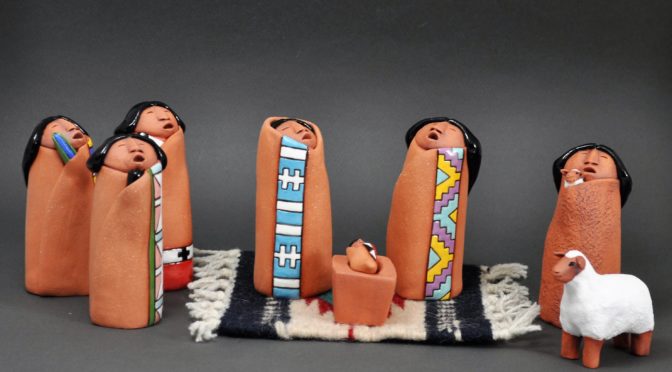
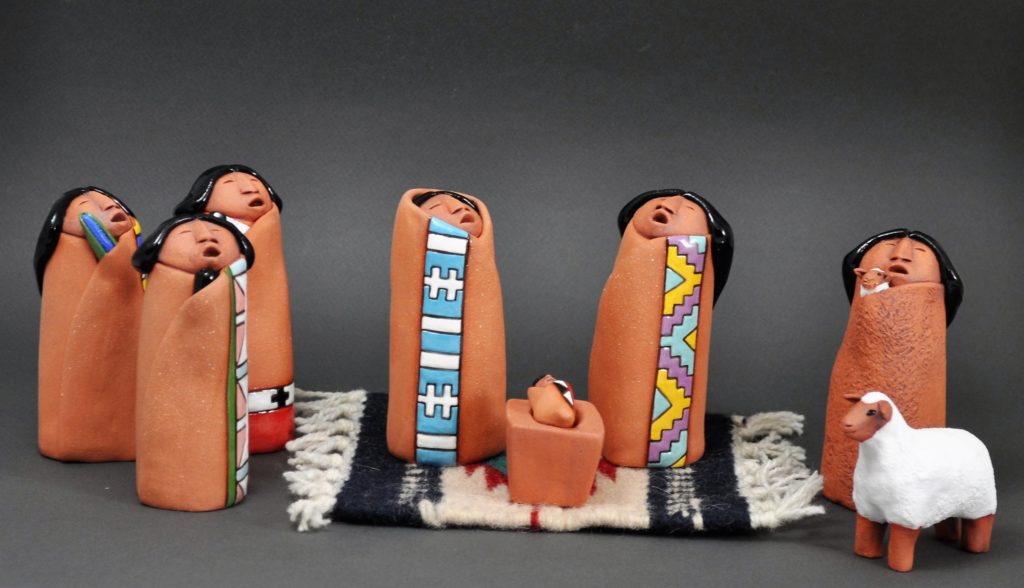
This Pueblo inspired nativity set was created by Ann Graffy. The figures reflect some of the characteristics of Pueblo life. Beautifully plain in their wrap-around clothes they become a perfect showcase for the simple but highly effective ceramic ornamentation. This nativity comprises nine figurines and a rug. The dimensions of the figurines are as follows: standing human figures are approximately 4 1/2″ x 2″ x 1 3/4′; baby & cradle, 1 1/2″ x 1 1/2″ x 1; sheep 2 1/4″ x 3 1/8″ x 1 ¼. The rug with fringe is6 3/4″ x 8″.

Ann Graffy was born to an Illinois farming family on March 21, 1953. She became interested in art during her early childhood and later began formal studies at the University of Arkansas where she received her bachelors’ degree. During Ann’s college years she joined the Catholic religious order of the Sisters of Mercy. During her 10 years in the order, Ann taught various art classes and developed art programs for many parochial schools. She designed cards and calendars and created several public works of art. After Ann left the Sisters of Mercy she continued her work as an artist. She is quite prolific and her work is always of high quality and accessible to the public.

Baltic Nativity

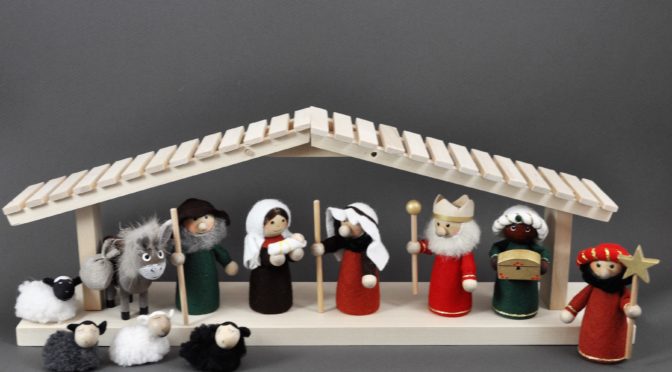
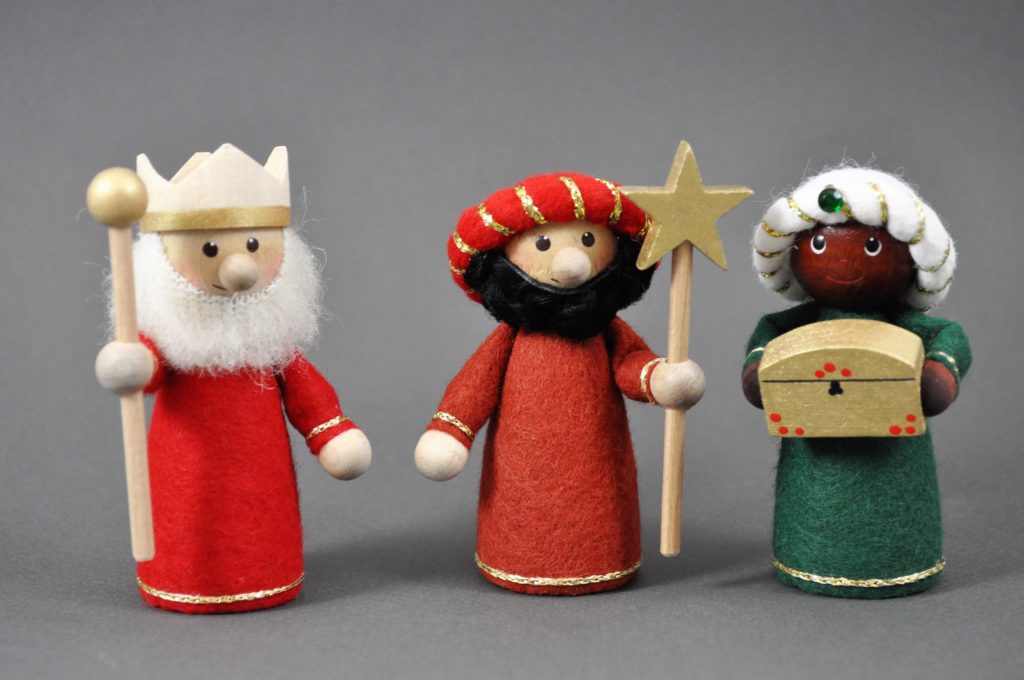
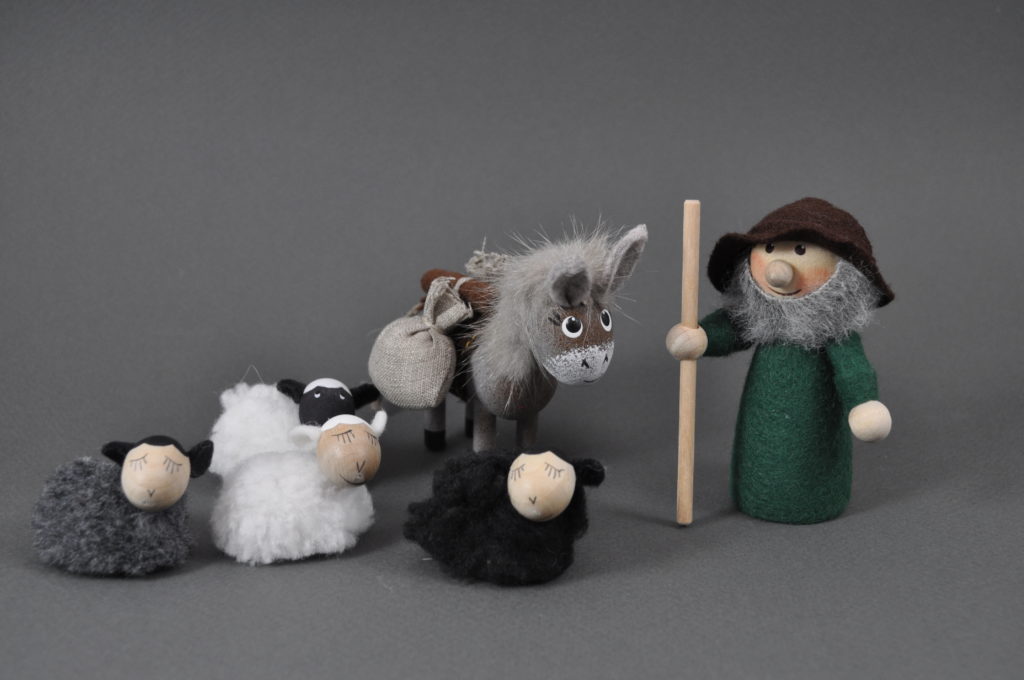
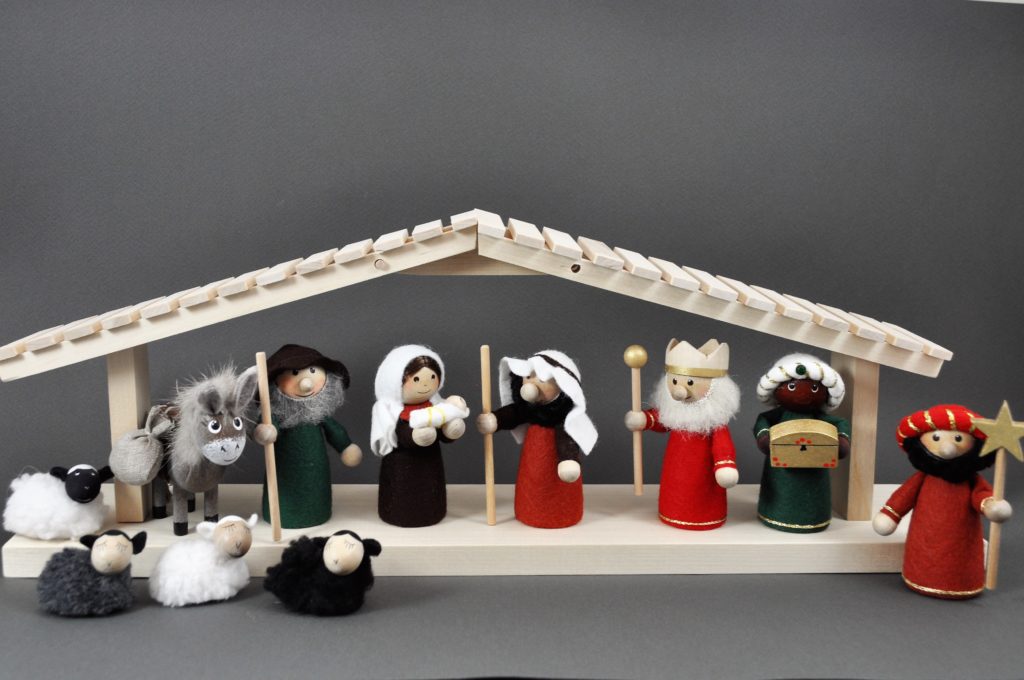
This delightful hand-lathed, hand-made wooden Nativity was created in the Baltic Nation of Estonia. The figurines are made of pine, birch and fabric. They are approx. 3 inches tall. The stable measures 16″ wide by 6.5″ high.

Note that the shepherd carries a star on a pole. This is a reference to the custom of children dressed as the magi going from house to house on epiphany, accompanied by a shepherd carrying the star.

Dravšnik Nativity

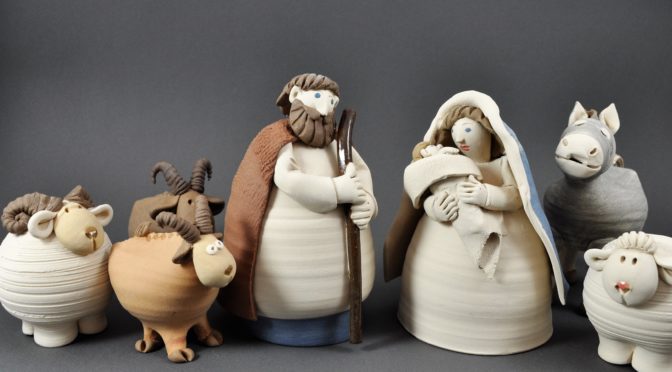
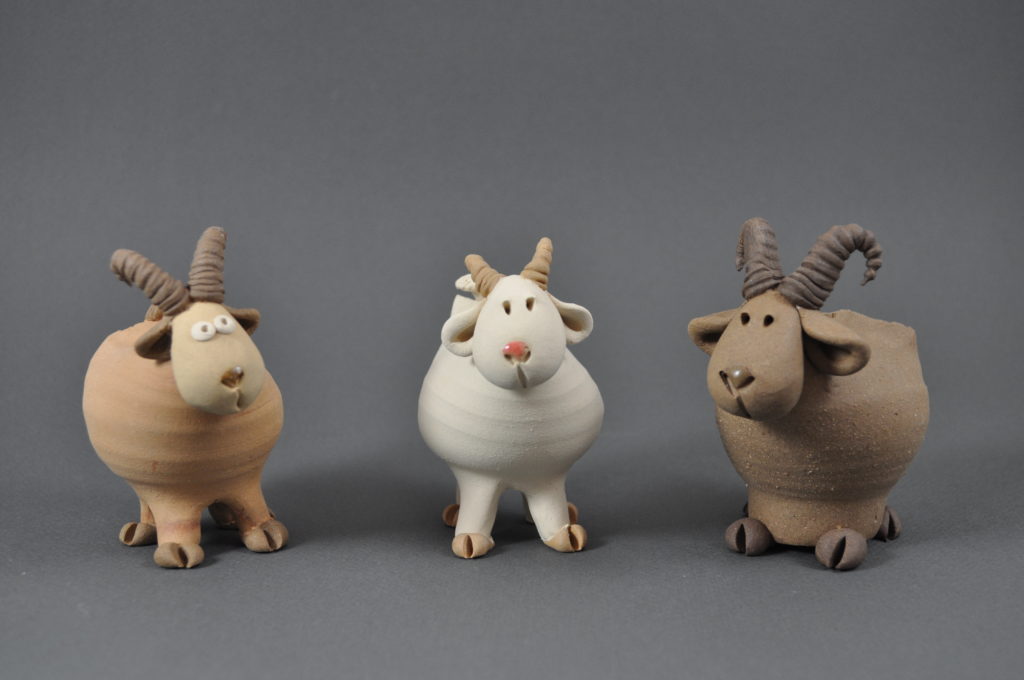
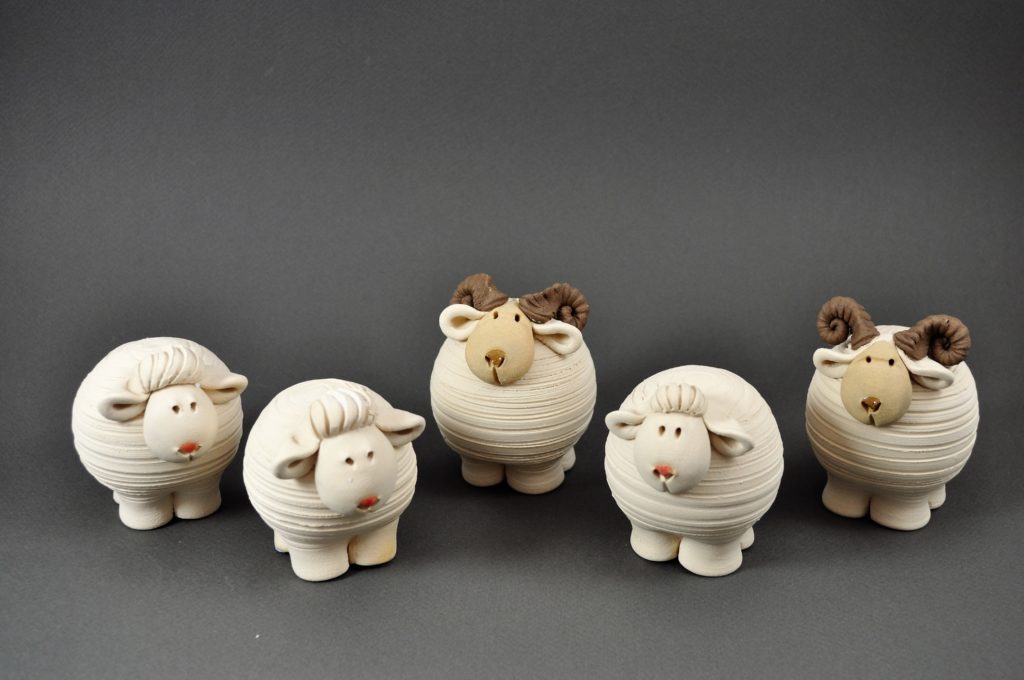
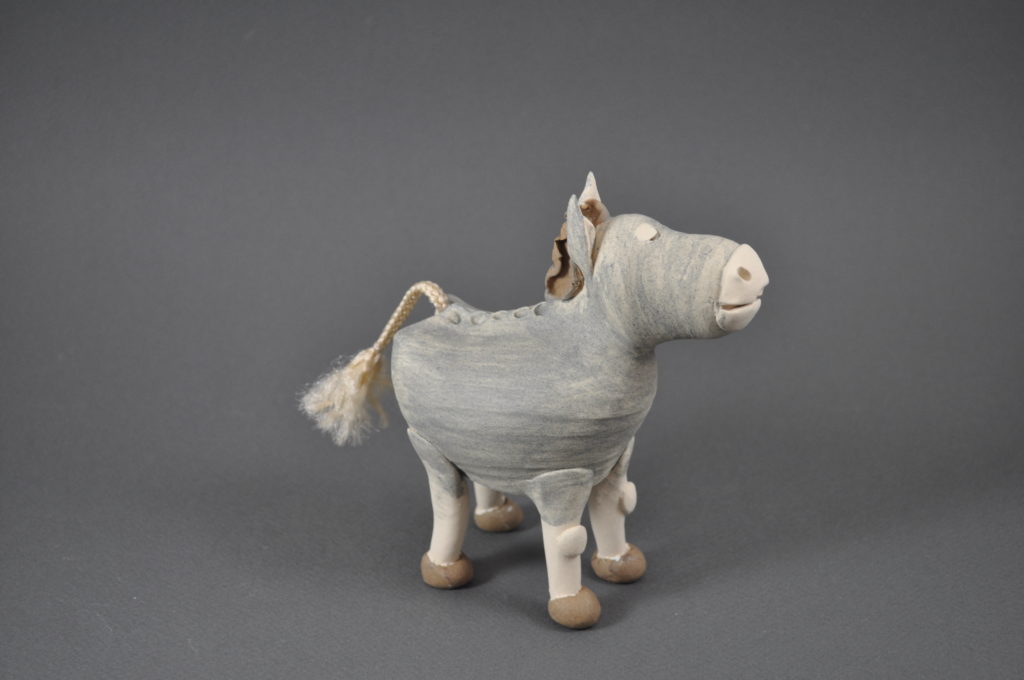
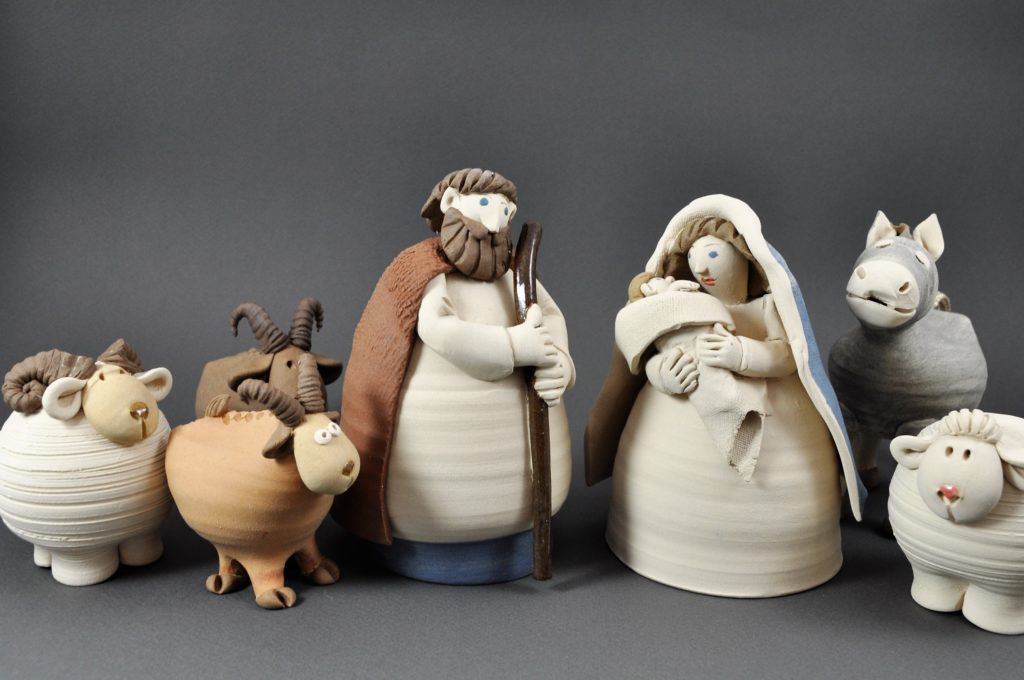
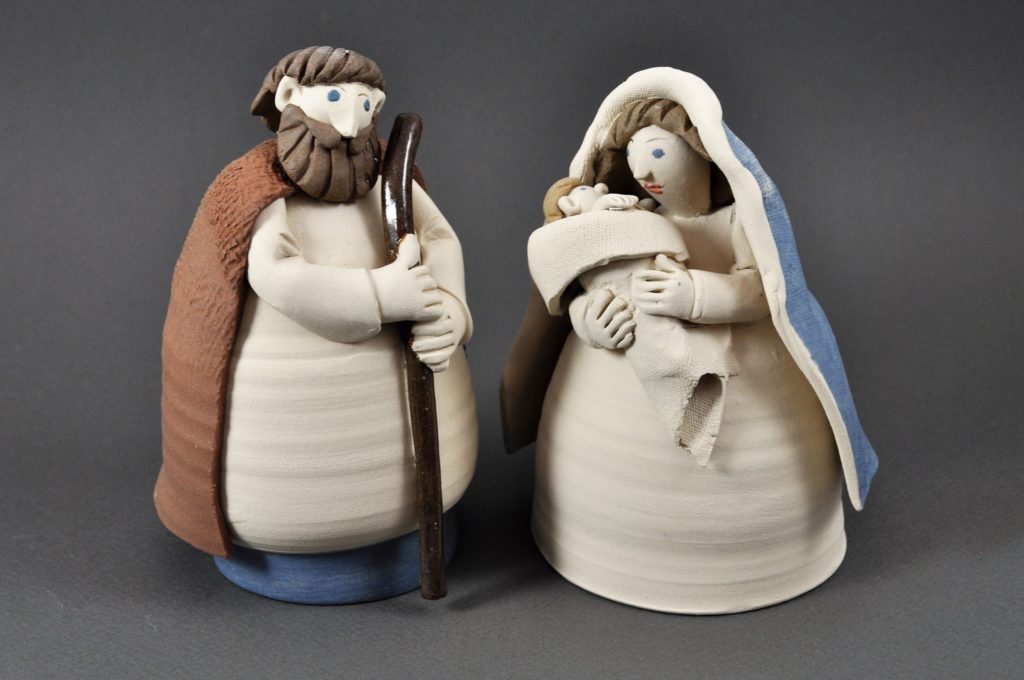
This nativity was handmade by Silva Dravšnik from Slovenia. The figurines are made of stoneware which differs from earthenware, using a potters wheel. Silva has used this technique for over 20 years creating many different figurines, both religious and non-religious.

The difference between stoneware and earthenware is twofold: first, the type of clay and second, the firing temperature. Earthenware uses low-fire clay. The firing temperature is up to 1,000 degrees F. Earthenware is porous when fired. Glazes used in earthenware are usually colorful, though there are exceptions. Examples of earthenware are bricks, flower pots, sculpture such as Raku pottery, Pueblo pottery, maiolica, and more.

Stoneware is made using high-fire clay, which is not porous when fired. The firing temperature is in the range of 2100 – 2372 degrees F. Stoneware glazes tend toward an earthy look, though there are exceptions. It is often used for handmade dinnerware, pitchers, outdoor ceramic sculpture, and handmade floor and wall tiles.

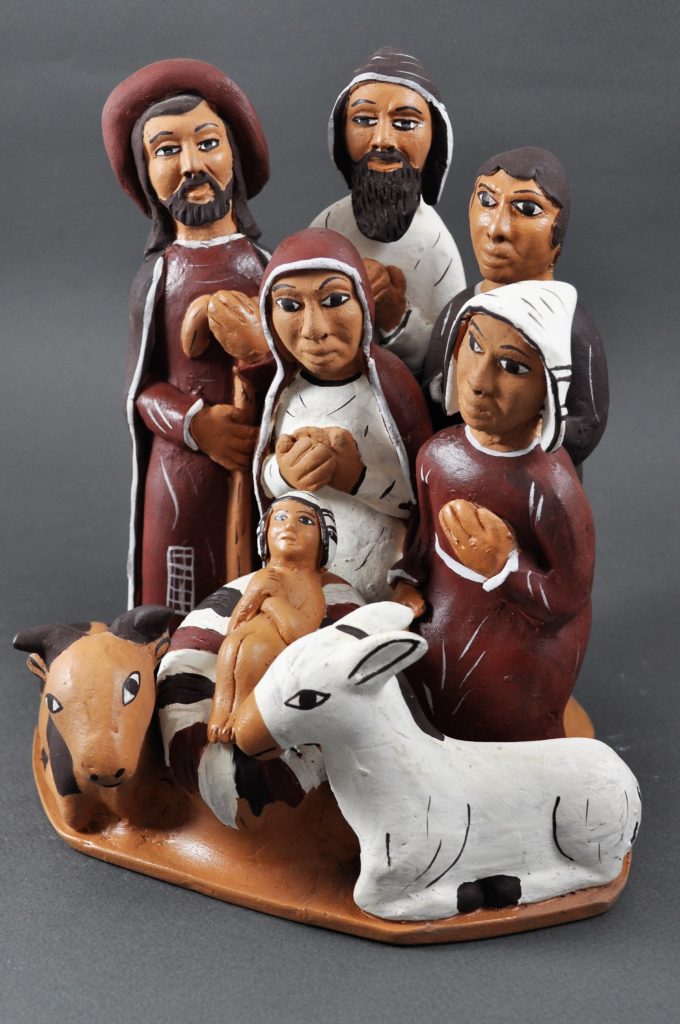
Allpa Nativity

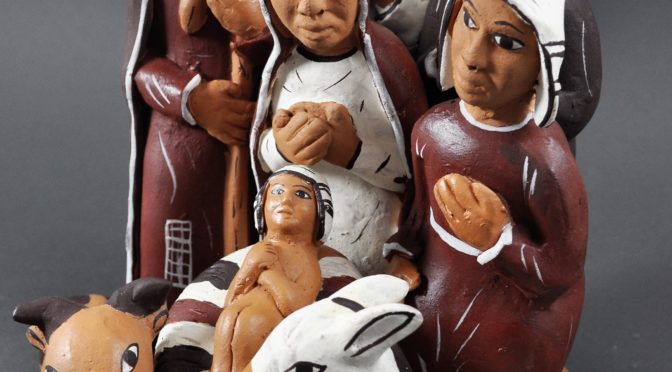
“Allpa” means “earth” in Quechua, reflecting the natural, handcrafted quality of this pottery and connection to the land.

Quechua is the language spoken by the Quechua people, the largest indigenous community in South America. They are descendants from the Inca and inhabit the Andes.

Quechua potters use clay that is sourced from local riverbeds. Their paint is made with natural pigments. After firing the pottery in open pits, while still hot, the pottery is coated with a tree resin which acts as a varnish and waterproofs the vessel.

This vintage clay nativity was made in the 1970ies in Peru. It is one piece comprising several figures: Mary and Joseph, the Christ Child, the three Magi and the traditional Ox and donkey. The colors are contrasting earth tones.